 0
0
 0
0
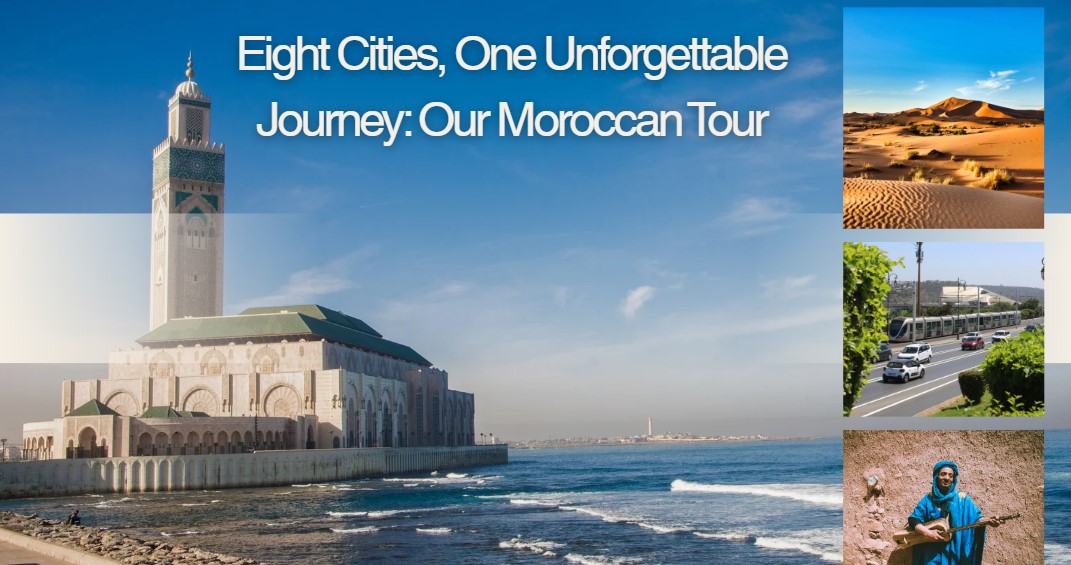
Our journey through Morocco began in the vibrant coastal city of Agadir, where an Austrian group—full of curiosity and good spirits—set off to explore the heart of this remarkable country. We were in excellent hands throughout the entire trip: guided by a highly knowledgeable and engaging tour guide, and supported by three wonderful Moroccan companions—our skilled bus driver, his ever‑helpful assistant, and a dedicated tour organizer who ensured every day ran smoothly.
From Agadir, our route led us across changing landscapes and centuries of history. We traveled through Quarzazat and Erfoud, crossed into the imperial cities of Meknes and Fes, continued onward to Rabat and Casablanca, and finally arrived in the unforgettable city of Marrakesh. Each day brought new impressions, new stories, and a new hotel to call home for the night.
It was a journey shaped by warm hospitality, shared experiences, and the rich cultural tapestry of Morocco—an adventure none of us will soon forget.
Day 1: Across the Atlas – From Ait Ben Haddou to Ouarzazate’s Cinematic Legacy
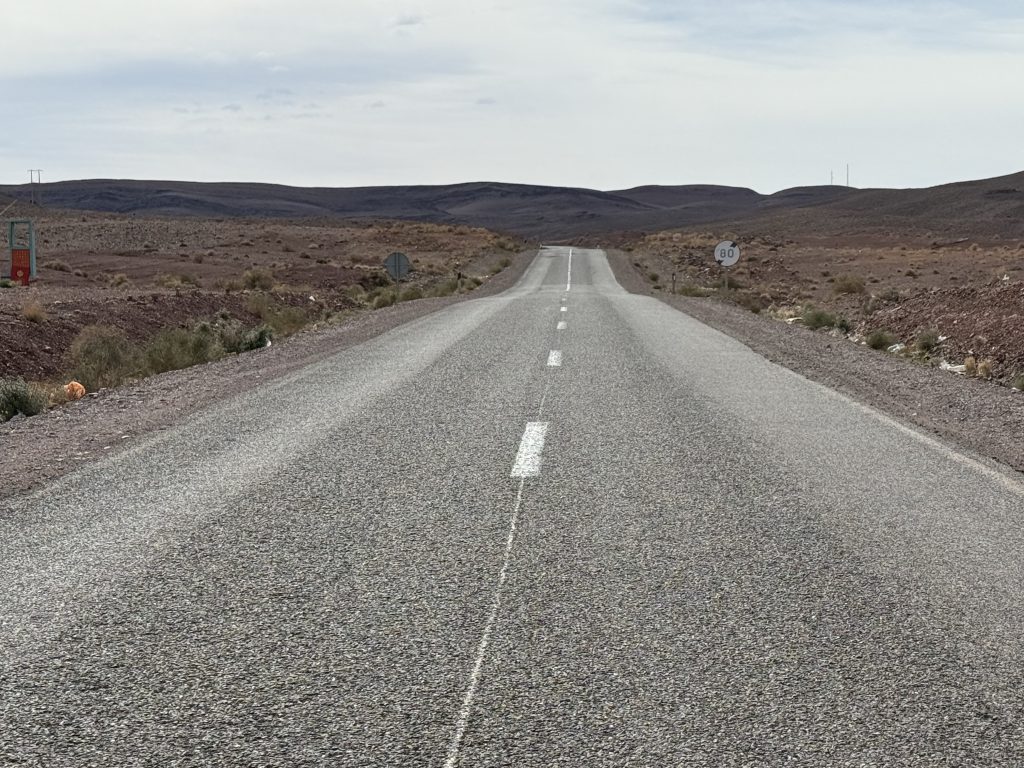
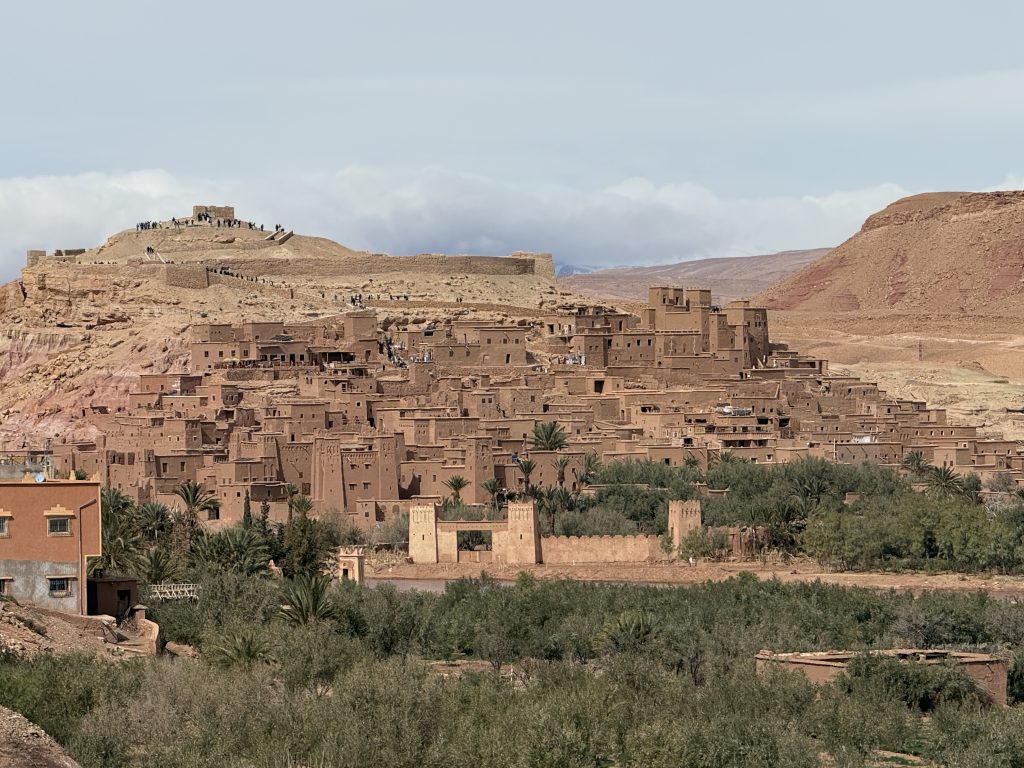
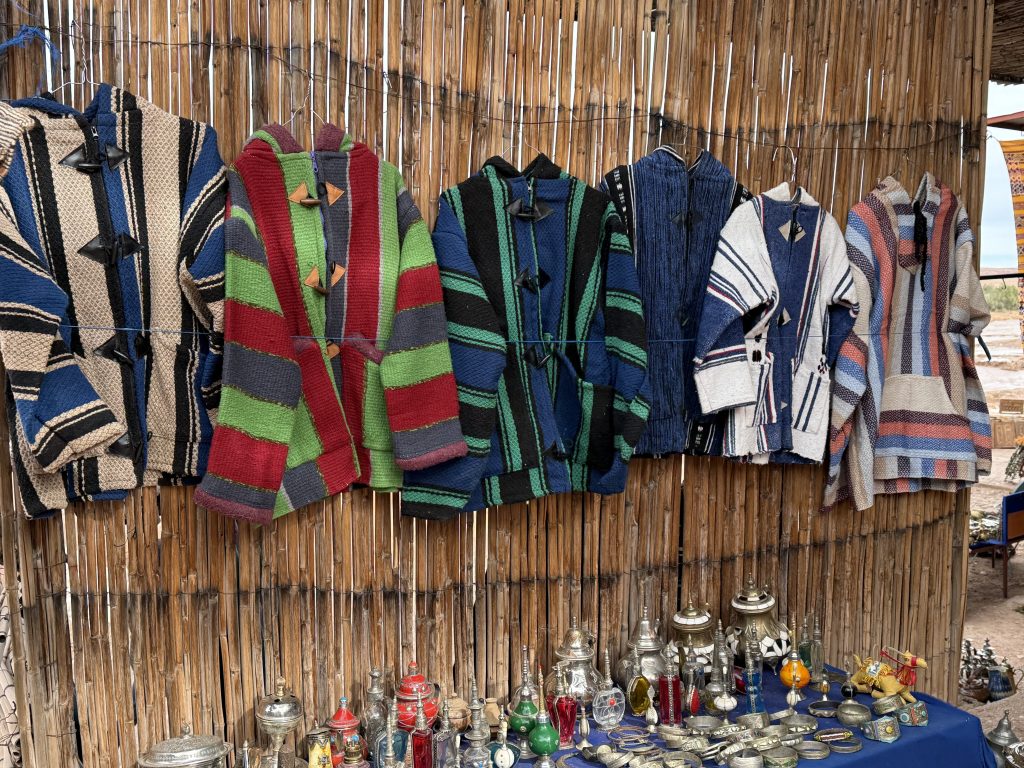
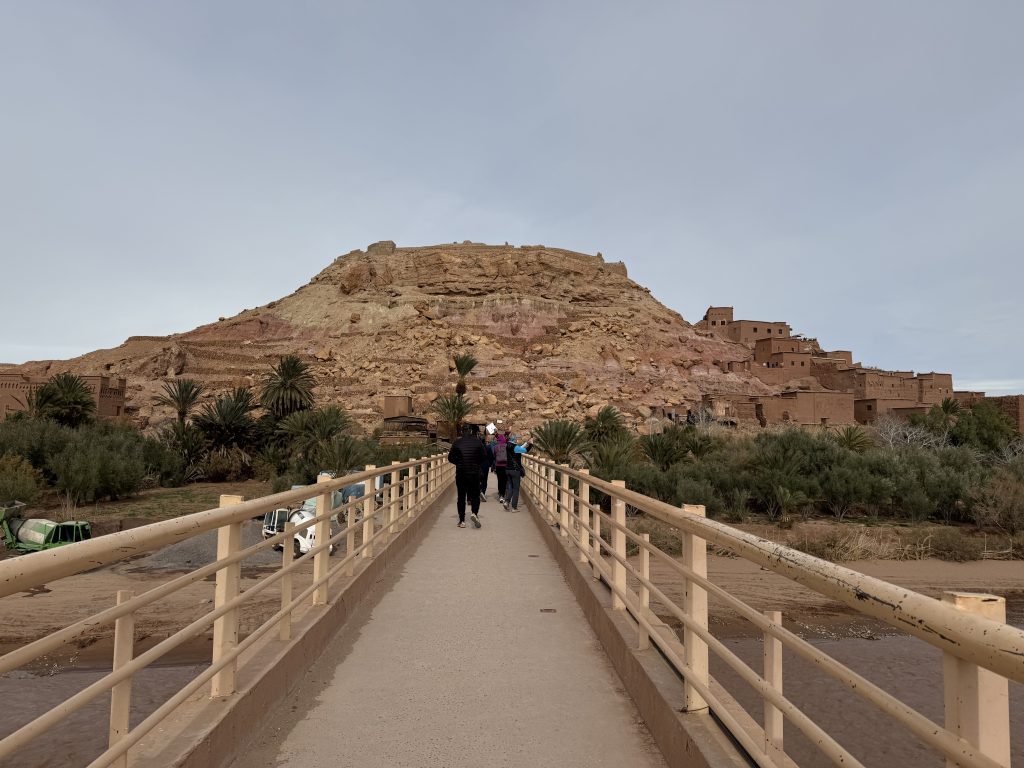
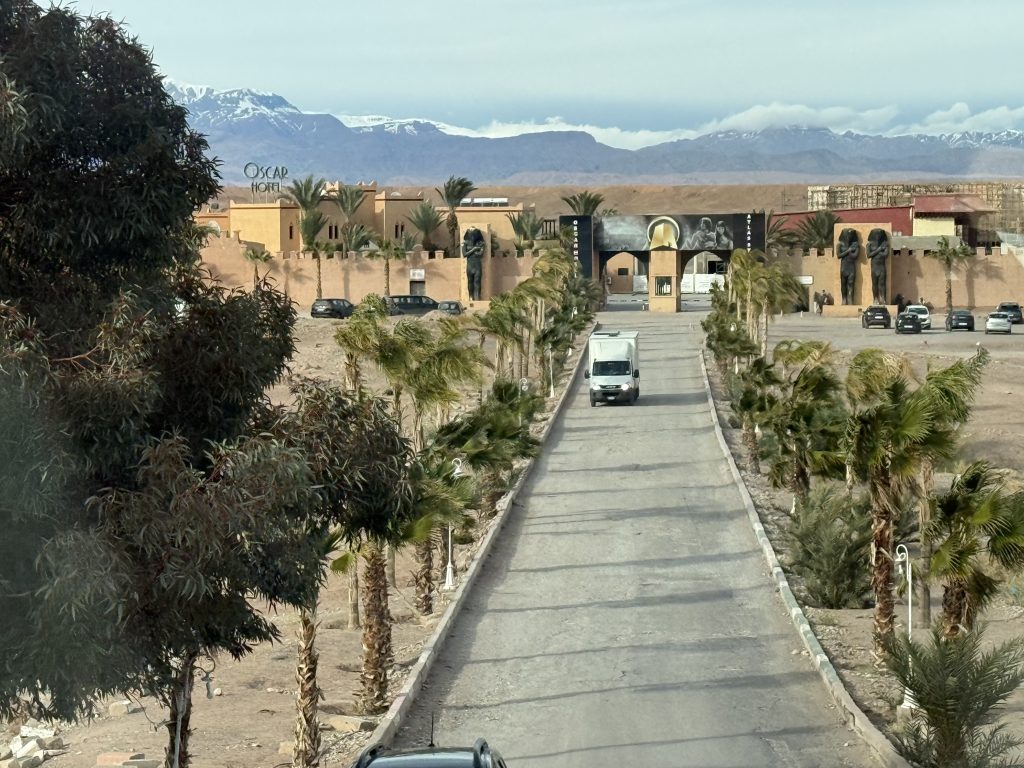
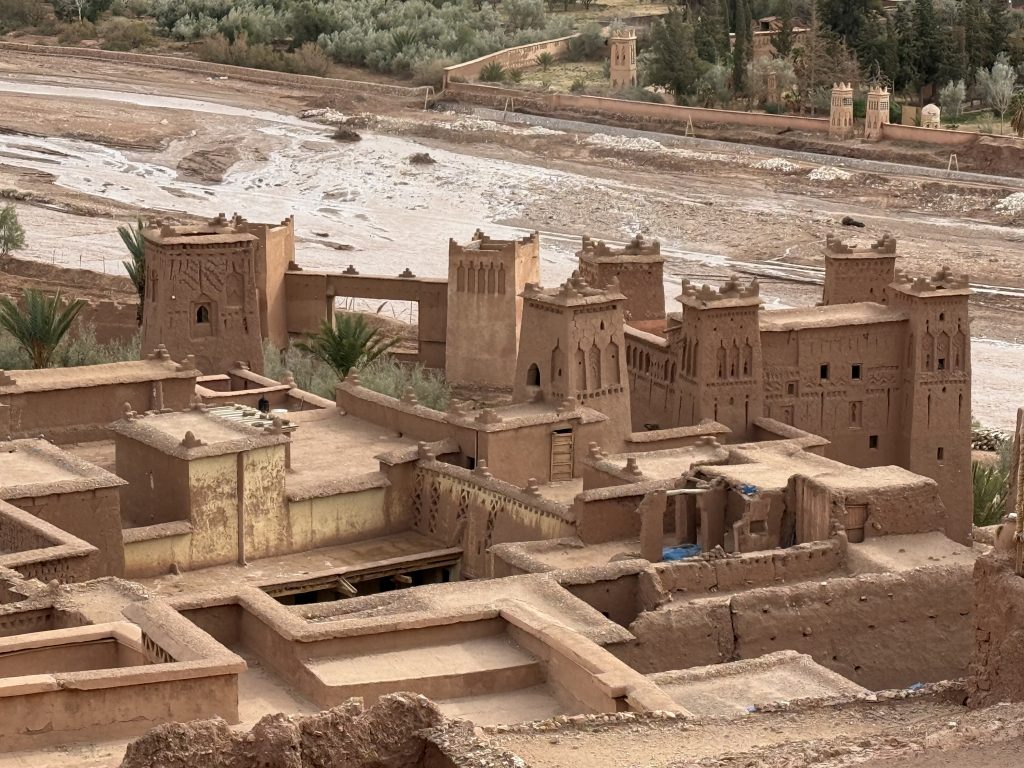
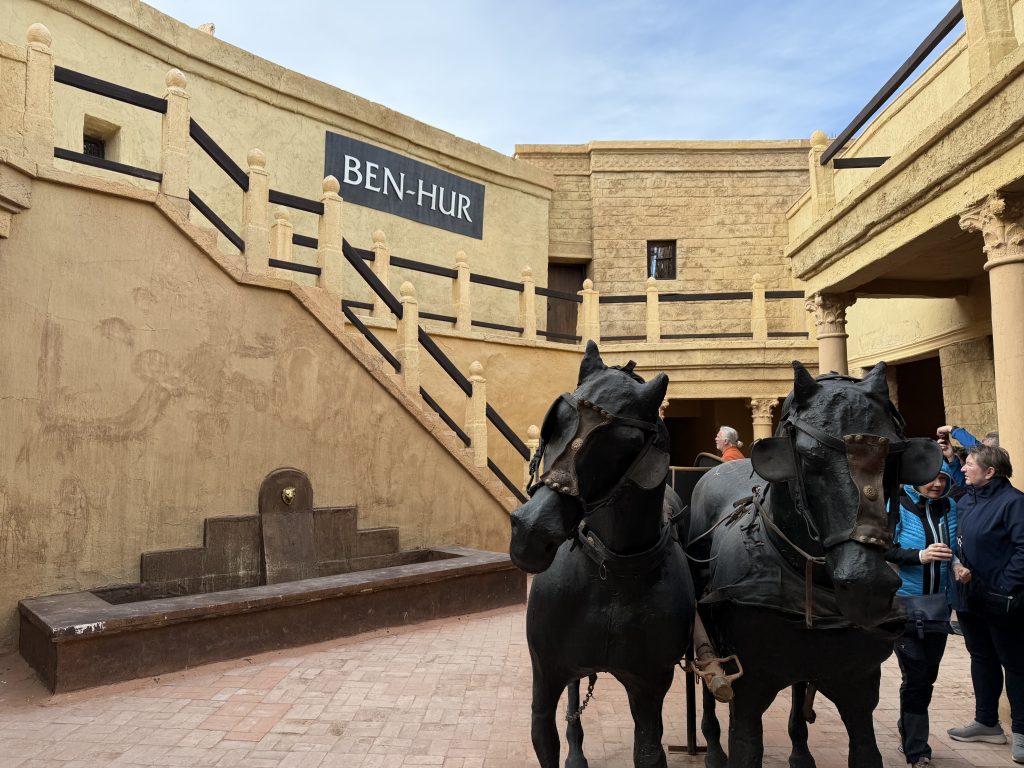
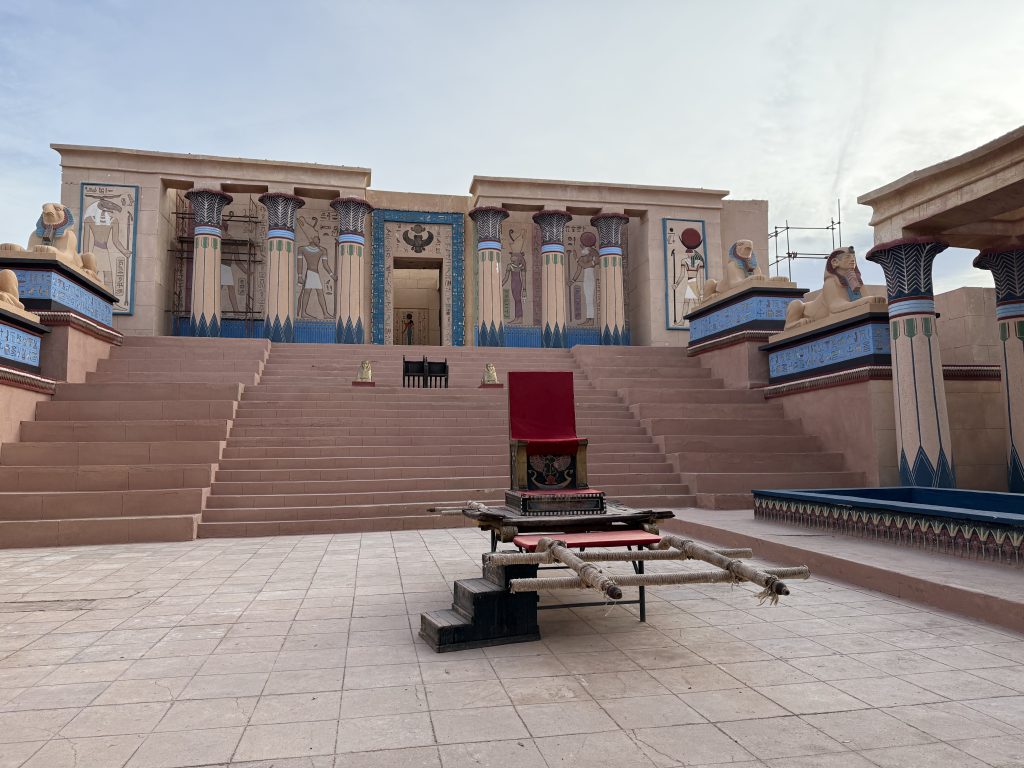
After an early breakfast, still feeling the quiet calm of the morning, we set off toward the Atlas Mountains. The road began to wind upward almost immediately, and with every turn the landscape shifted. Greens faded into ochres, and rocky cliffs rose like ancient guardians of the route. As we climbed higher, the air grew cooler and clearer, and the colors of nature seemed to multiply—deep reds, dusty yellows, and unexpected patches of green that clung stubbornly to the mountainsides. Crossing the Tichka Pass at 2,261 meters felt like stepping into another world. The breeze carried a hint of the Sahara, warm and dry, as if whispering that the desert was not far away.
Throughout the journey, our tour guides proved invaluable. They were highly proficient, sharing fascinating details about the history, culture, and geography of each place we passed. Their explanations transformed the scenery into a living story, allowing us to appreciate not just the beauty of the landscapes but also the significance behind them. Every stop felt richer because of their knowledge and enthusiasm.
Our first major visit was the village of Ait Ben Haddou, a place I had seen in photos but never imagined would feel so alive. Built from earth and clay, the village rises in layers, its kasbahs glowing softly under the midday sun. Walking through its narrow alleys felt like traveling back in time. It was easy to understand why filmmakers chose this place as the backdrop for legendary movies like Ben-Hur, Indiana Jones, The Scorpion King, and Gladiator. There is something cinematic in the air—every corner looks like a film set, every doorway a story. We enjoyed lunch there, savoring local flavors while looking out over the ancient settlement.
Afterward, we continued to Ouarzazate, reaching the famous Atlas Studios about an hour later. Stepping inside felt surreal. Sets from iconic films stood quietly under the bright sky, waiting for the next story to be told. We wandered through grand halls and desert palaces, and even found ourselves pretending to act out a scene from Cleopatra. It was playful and a bit ridiculous, but also unforgettable—one of those spontaneous moments that make a trip truly personal.
As the sun began to lower, we made our way back to our hotel, the 4‑star Hotel Club Hanane. The day’s impressions lingered with me: the shifting landscapes, the sense of history, the unexpected brushes with movie magic, and the guidance that made it all come alive. Falling asleep that night, I felt both tired and deeply grateful—Morocco had already begun to weave its spell.
Day 2: Gateway to the Sahara – From Todra Gorge to the Dunes of Merzouga
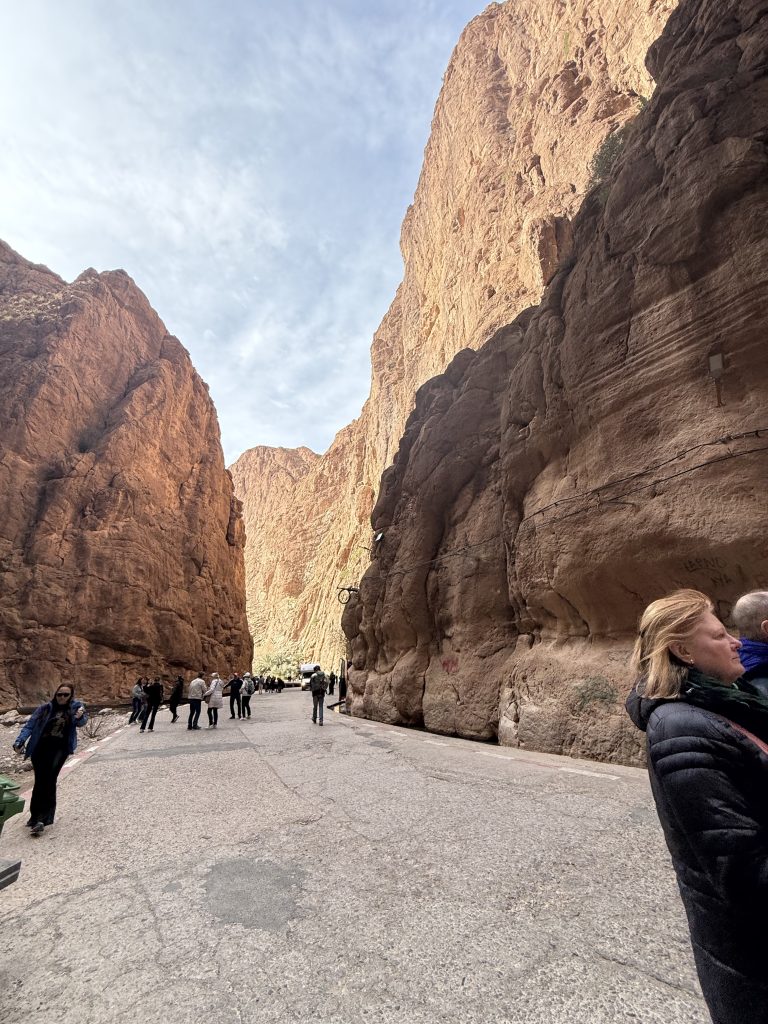
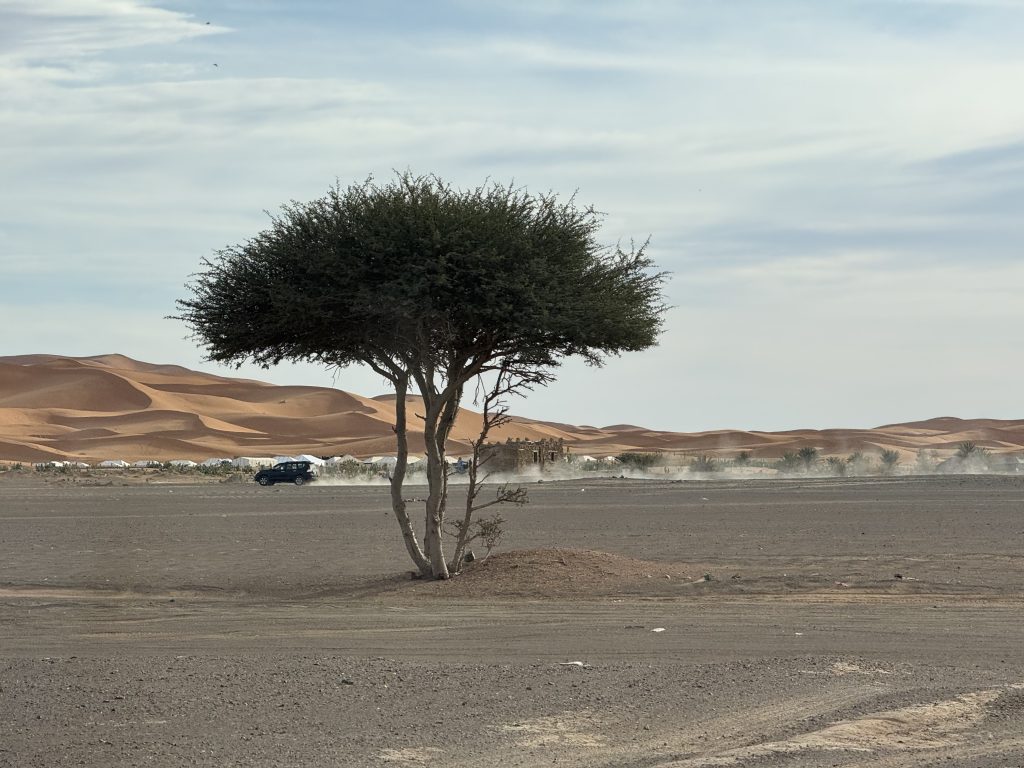
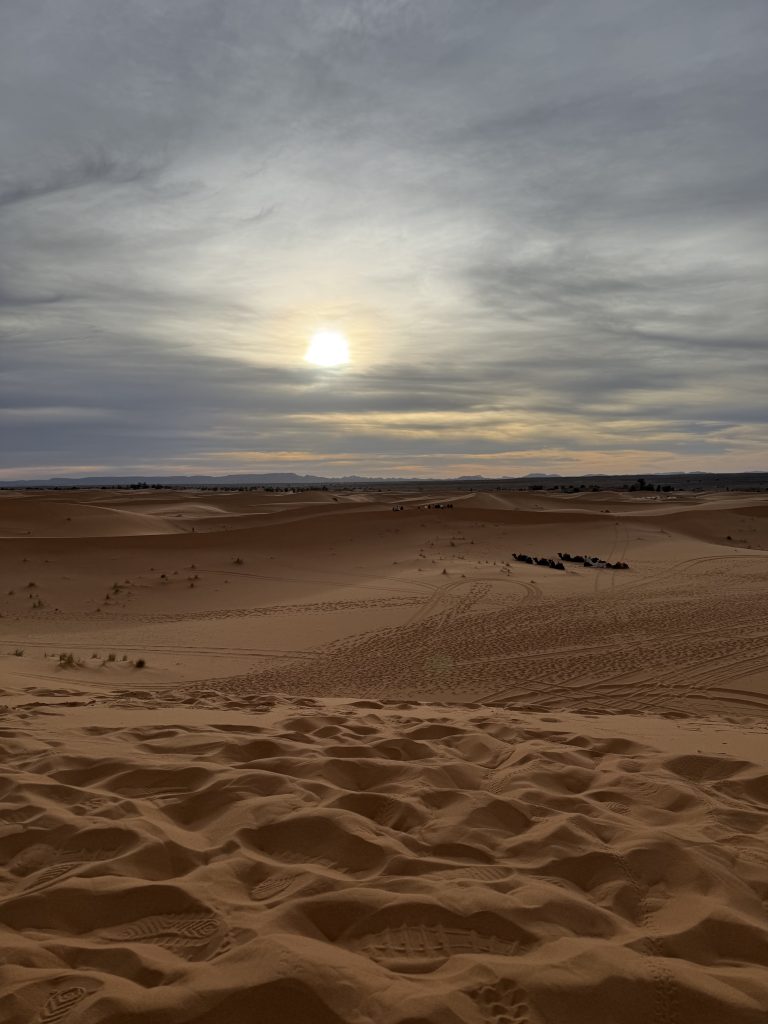
After breakfast, our second day in Morocco began with anticipation. At around 8 AM, the bus departed from our hotel, heading toward the desert region of Erfoud and Merzouga. The morning air was crisp, and as the city faded behind us, the scenery unfolded into a tapestry of valleys, plains, and rugged cliffs. Our tour guide, Salim, once again proved to be an excellent companion. His proficiency and passion for storytelling brought the landscapes to life, as he explained the historical and cultural significance of the places we passed.
One of the highlights of the day was our visit to the Todra Gorge. Rising dramatically from the earth, its limestone cliffs soar up to 300 meters, creating a natural wonder that has long been admired by travelers and locals alike. Historically, the gorge served as a passageway for Berber tribes and caravans moving between the High Atlas and the Sahara. Today, it is not only a geological marvel but also a symbol of resilience, where communities have thrived despite the harsh environment. We paused to take photographs, capturing the interplay of light and shadow on the towering walls, before enjoying a lunch break near Toudgha El Oulia, a small village nestled in the valley. The contrast of green palm groves against the stark cliffs was striking, a reminder of how life flourishes even in the most unlikely places.
Continuing our journey, the road led us through vast plains and valleys, each turn revealing new vistas. By late afternoon, we reached Erfoud, a town often referred to as the “Gateway to the Sahara.” Erfoud has historical importance as a center for fossil discoveries, with remnants dating back hundreds of millions of years. It also played a role in caravan trade routes, connecting merchants who traversed the desert with goods and stories from distant lands. After checking into our hotel, we quickly switched to jeeps for an excursion to Er Rissani.
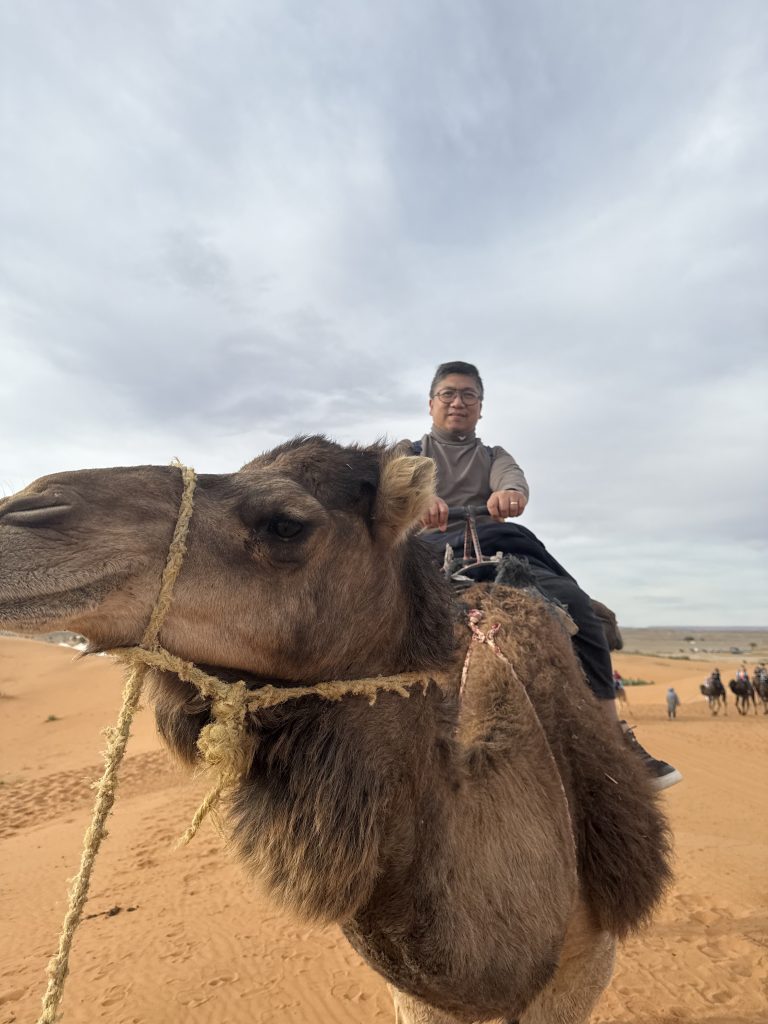
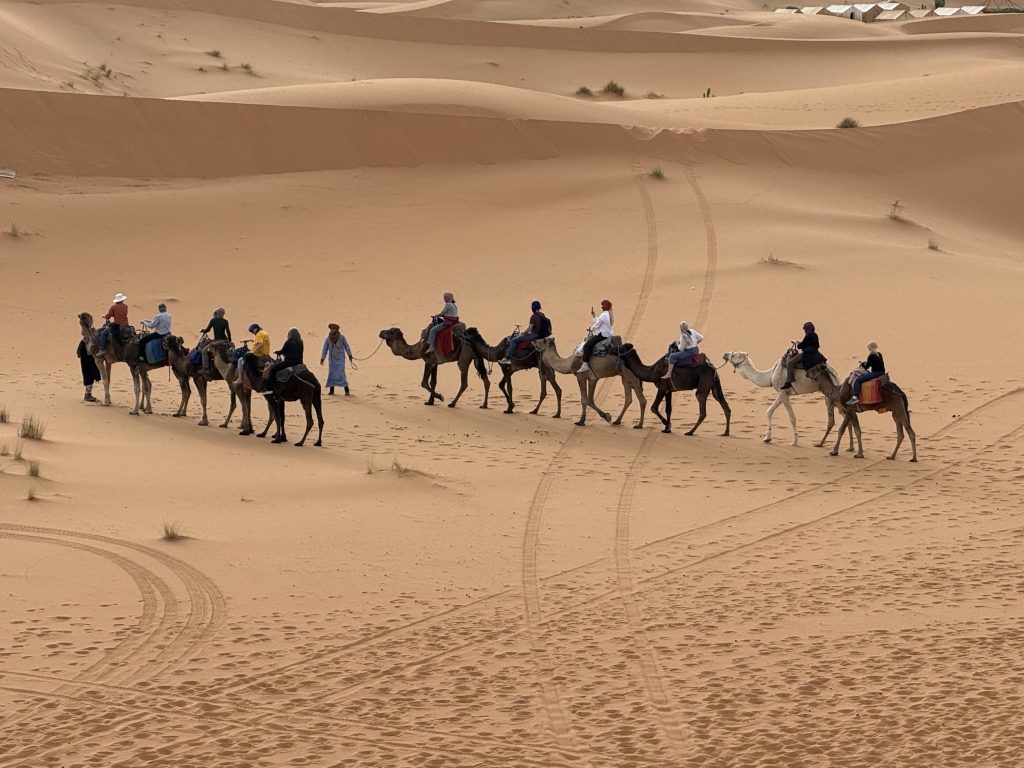
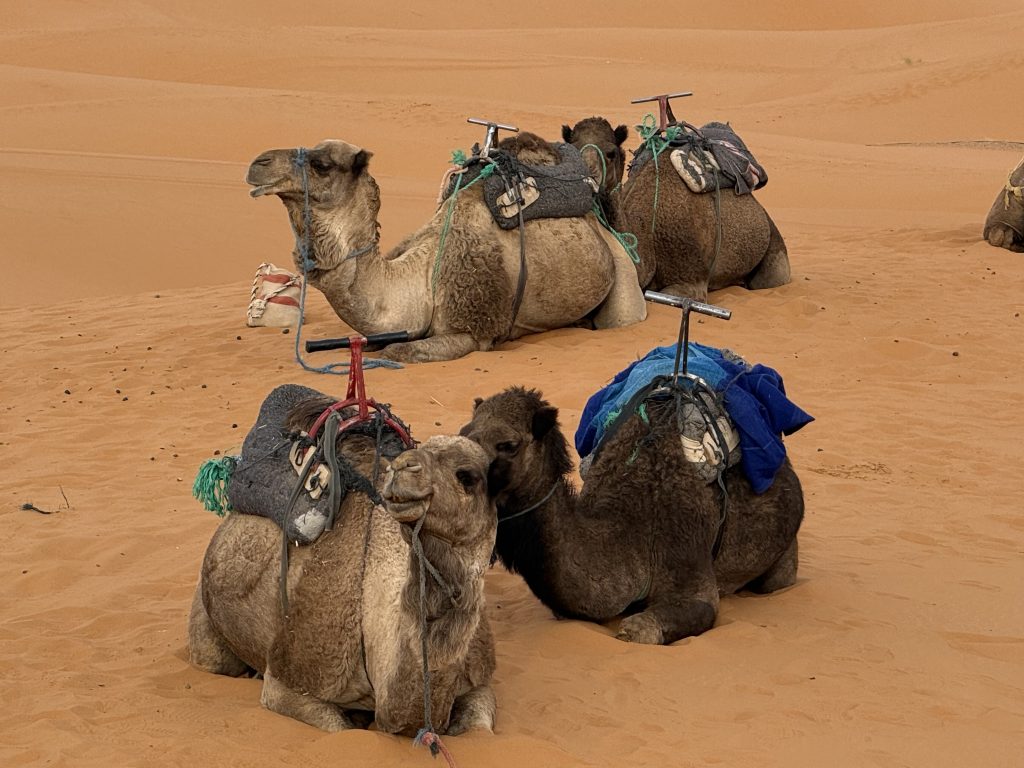
Rissani itself is steeped in history. Once the capital of the Alaouite dynasty—the ruling family of Morocco—it was a vital hub for trans-Saharan trade. Caravans laden with salt, gold, and spices passed through here, making it a flourishing marketplace. Selim explained how the town’s legacy continues today, with its traditional souks and cultural heritage. From Rissani, we mounted camels and began our trek into the desert. The rhythmic sway of the camels, the silence of the dunes, and the vastness of the horizon created a meditative atmosphere. Climbing to the highest peak of the desert, we watched the sun descend, painting the sands in hues of orange and gold. It was a moment of pure serenity, a timeless experience that connected us to centuries of travelers who had witnessed the same spectacle.
By 8 PM, we returned to our hotel in Erfoud, where dinner awaited. The day had been long but deeply rewarding, filled with history, adventure, and unforgettable sights. As we prepared for rest, excitement grew for the next leg of our journey—toward Meknes, another city rich in Moroccan heritage.
Third Day in Morocco: From the Atlas Mountains to Historic Meknes
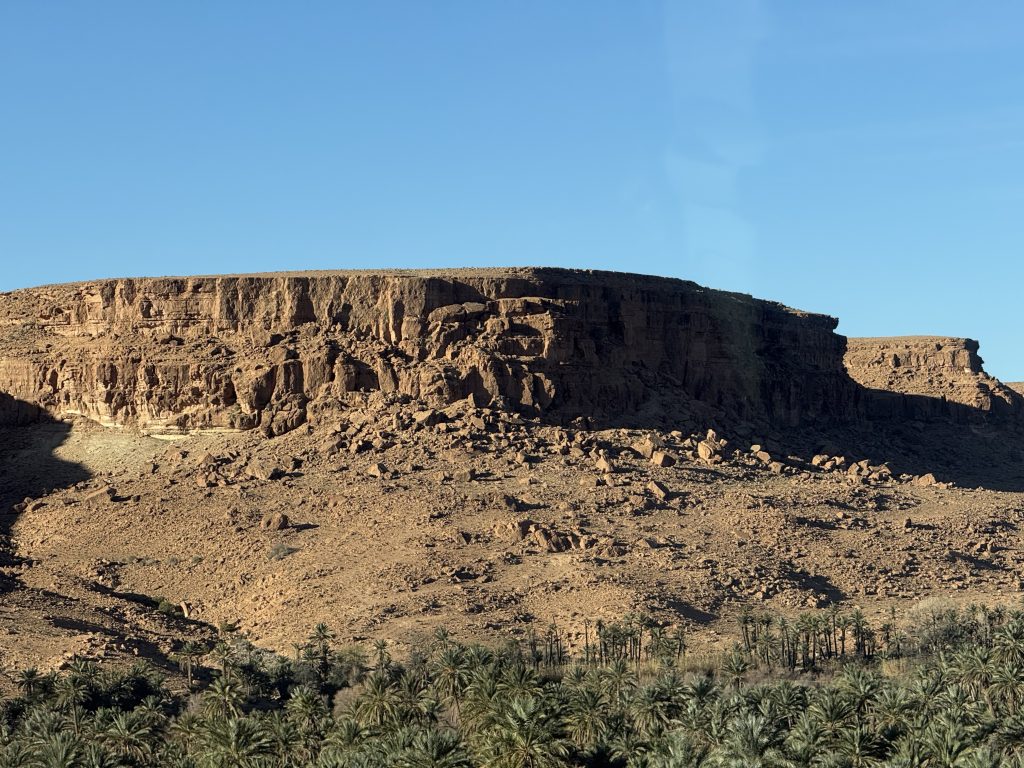
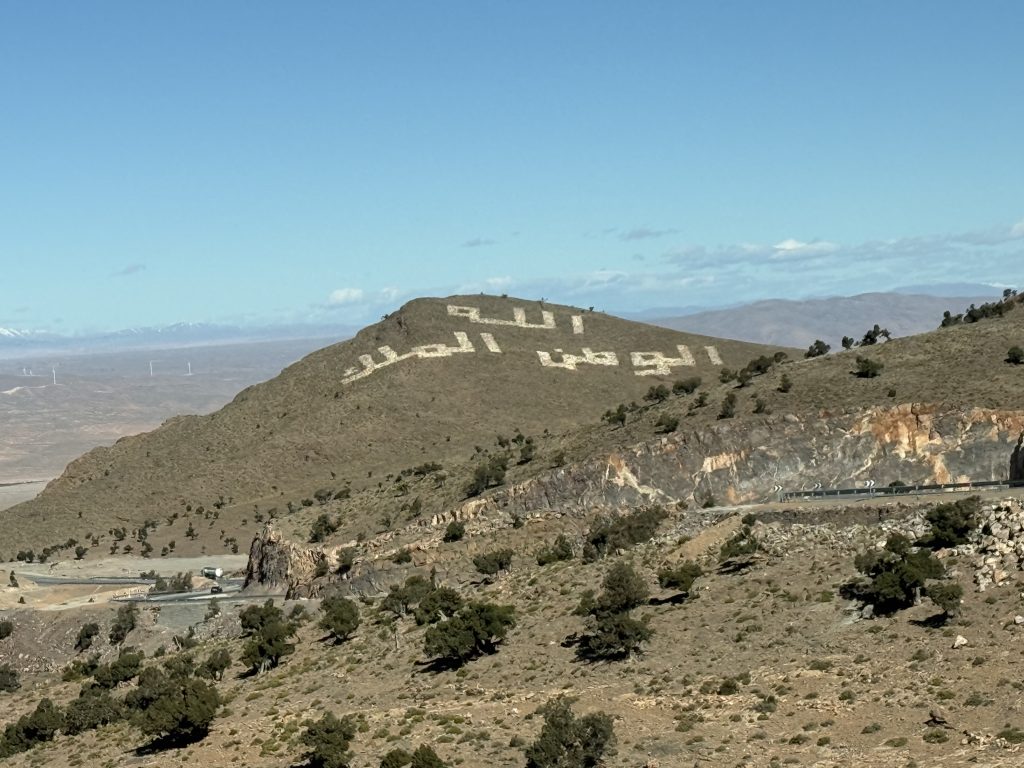
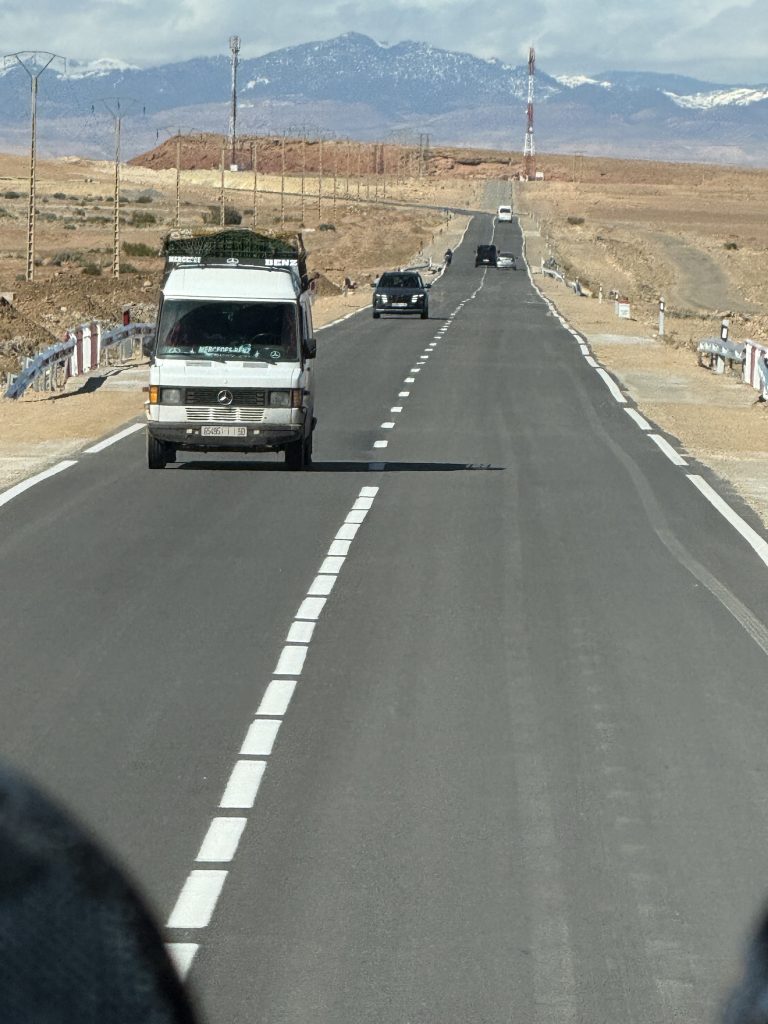
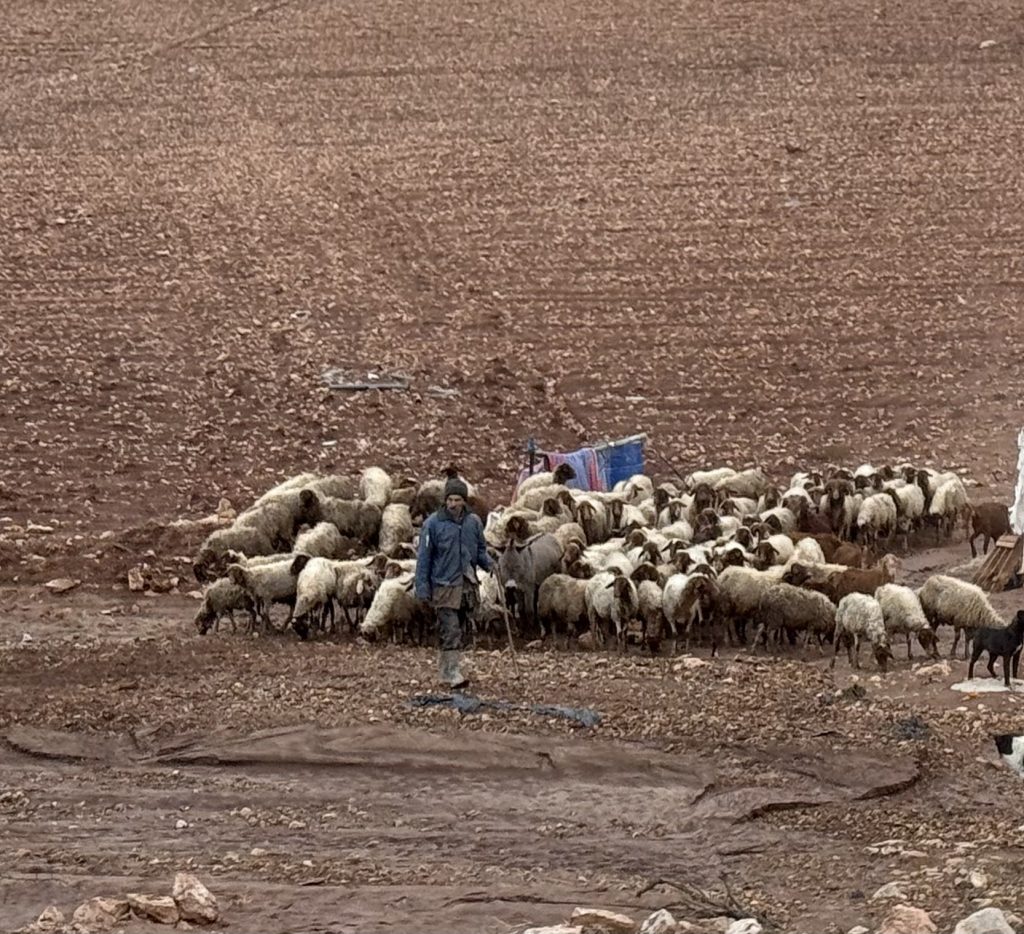
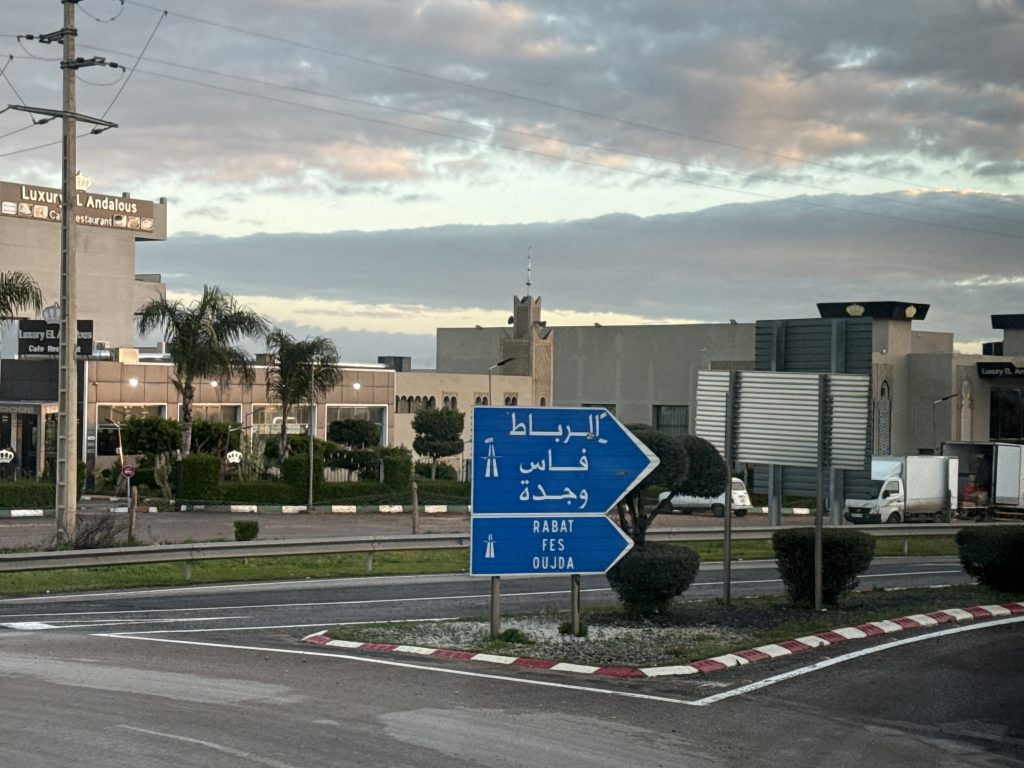
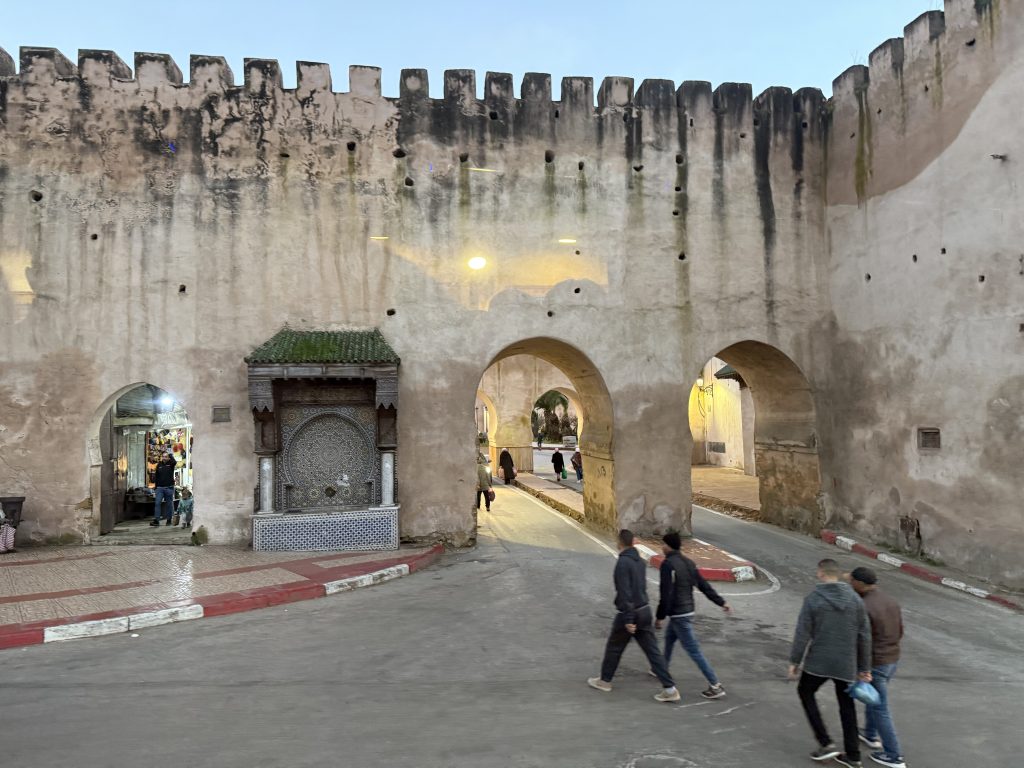
Our third day in Morocco began before the sun fully rose, with an early breakfast and the excitement of a long journey ahead. Today’s destination was the imperial city of Meknes, nearly 460 kilometers away. As we left behind the quiet morning streets, the landscape slowly transformed into something straight out of a storybook.
The road led us through the majestic High and Middle Atlas Mountains, where mountain passes rose to an altitude of around 2,200 meters. The air felt cooler and fresher, and every turn revealed breathtaking views — rolling hills, lush orchards, and wide open fields where herds of sheep and goats grazed peacefully. We spotted Berber families living in the mountains, many in traditional stone houses that seemed perfectly blended into the rocky terrain. These homes, built from local materials, reflected centuries-old architectural practices designed to withstand harsh winters and hot summers.
Crossing the Atlas Mountains felt like traveling through history itself. For centuries, these ranges have served as both a natural barrier and a cultural bridge, separating the coastal plains from the Sahara Desert while preserving the unique traditions of Morocco’s indigenous Berber people. Our guide shared stories about how ancient traders once crossed these same routes with caravans full of spices, gold, and textiles.
One of our most memorable stops was in the charming town of Ifrane. Often referred to as the “Switzerland of Morocco,” Ifrane immediately felt different from other Moroccan cities we had seen. With its clean streets, European-style houses, and cedar forests nearby, it truly resembled a small alpine town. Built during the French colonial period in the 1930s, Ifrane was designed as a hill station for French officials to escape the summer heat. Even today, it remains a popular retreat and is home to one of Morocco’s most prestigious universities. Taking a short break here was refreshing, and the cool breeze was a welcome change from the warmer lowlands.
After continuing our journey, we finally arrived in Meknes, one of Morocco’s four imperial cities. Our tour guide kindly drove us around before heading to the hotel, showing us both the old medina and the newer parts of the city. Meknes holds deep historical significance, having risen to prominence in the 17th century under Sultan Moulay Ismail. He transformed it into a grand capital filled with massive gates, palaces, mosques, and miles of fortified walls. Though sometimes overshadowed by cities like Fez and Marrakech, Meknes carries a quieter charm and a powerful sense of history.
Even though we were in the bus — I could feel the echoes of the past in the ancient architecture and bustling markets. It truly felt like stepping into a living museum.
We ended the day with an overnight stay at the elegant four-star Hotel Transatlantique in Meknes. After such a long yet fascinating journey, resting there felt well deserved. As I reflected on the day, I realized how beautifully Morocco blends nature, culture, and history — each mile offering a new story waiting to be discovered.
4th day: From the Ancient Streets of Fez to the Coastal Capital Rabat
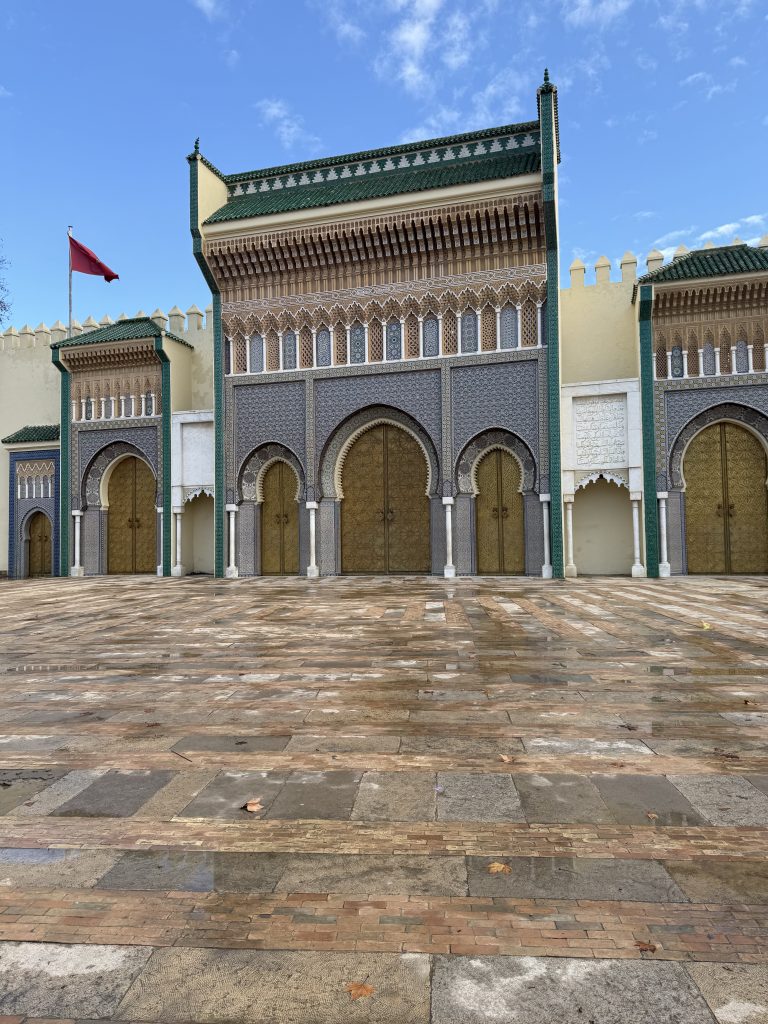
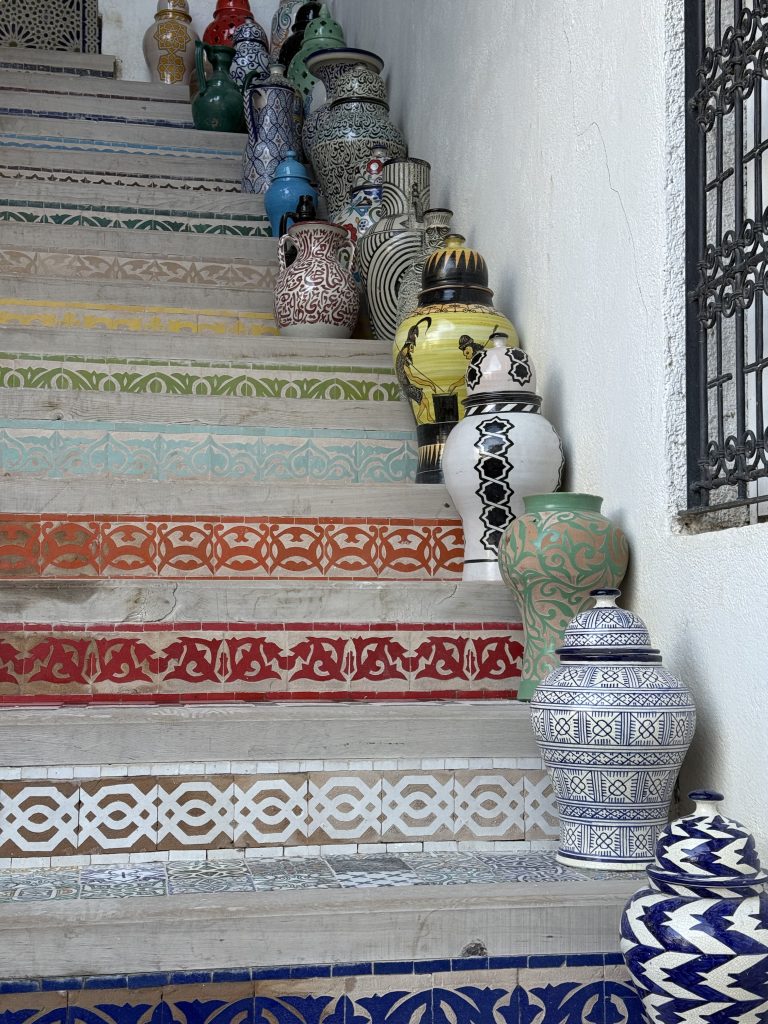
After a hearty breakfast in Meknes, we set off toward the legendary city of Fez, often considered the spiritual and cultural heart of Morocco. The drive was pleasant, with changing landscapes that slowly gave way to a bustling urban atmosphere as we approached one of the country’s oldest imperial cities.
Our tour began at the King’s Gate of the Mellah, the historic Jewish Quarter of Fez. The Mellah dates back to the 15th century and once housed a thriving Jewish community that played an important role in trade, craftsmanship, and diplomacy. Walking near its gates, I could sense the layered history of coexistence that has shaped Moroccan culture for centuries. From there, we continued to Burj Hill, which offered a stunning panoramic view of the sprawling city below — a perfect moment to pause and appreciate the vastness of Fez.
Next came the unforgettable experience of wandering through the Medina of Fez, a UNESCO World Heritage Site and one of the largest car-free urban areas in the world. With more than 9,000 narrow streets and alleys, it felt like stepping into a maze frozen in time. Every corner revealed something new — donkeys carrying goods, vendors selling colorful spices, and artisans carefully crafting their products by hand.
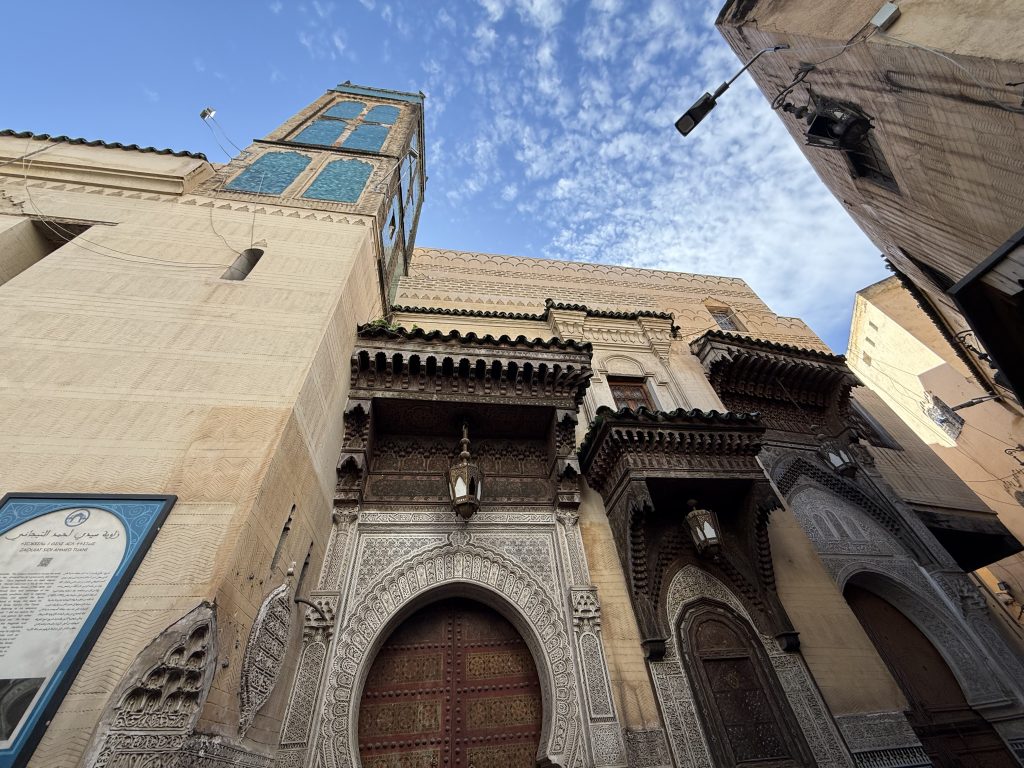
One of the highlights was the Karaouine Mosque and University, founded in 859 AD by Fatima al-Fihri. Recognized as the oldest continuously operating university in the world, it has been a center of Islamic learning for over a thousand years. Standing outside its grand courtyard, I felt humbled knowing that scholars from across Africa and Europe once studied here.
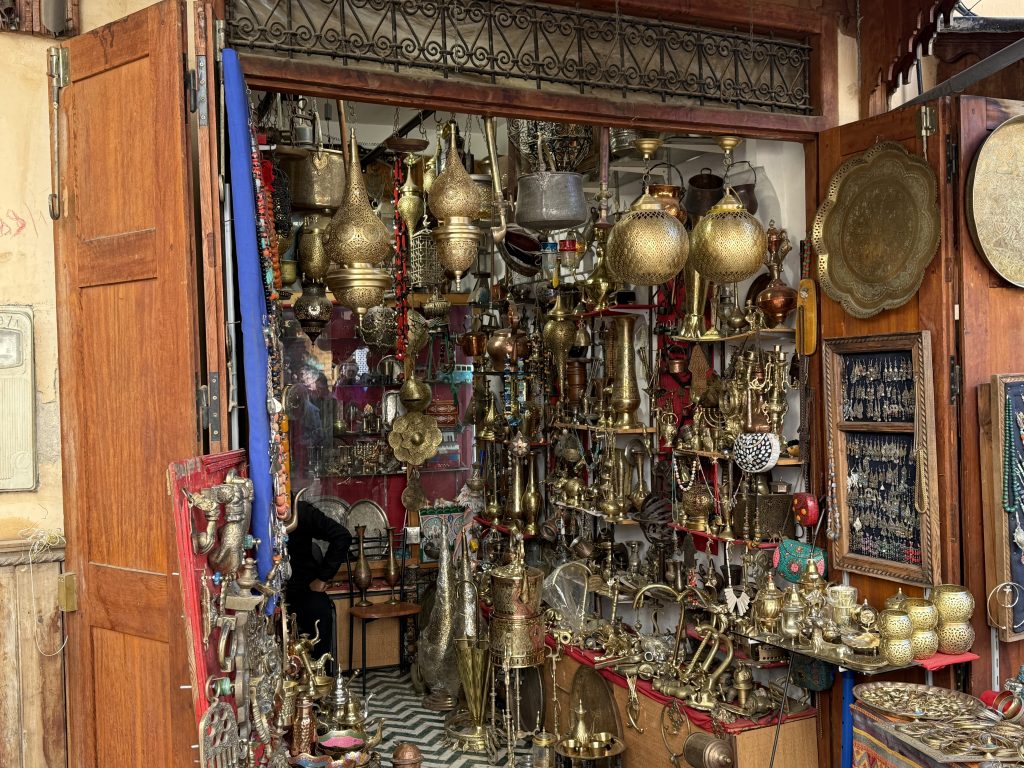
The copper workshops and craftsmen’s bazaar were alive with energy. The rhythmic hammering of metal and the glow of polished brass created a sensory experience I will never forget. It was inspiring to see traditions passed down through generations still thriving today.
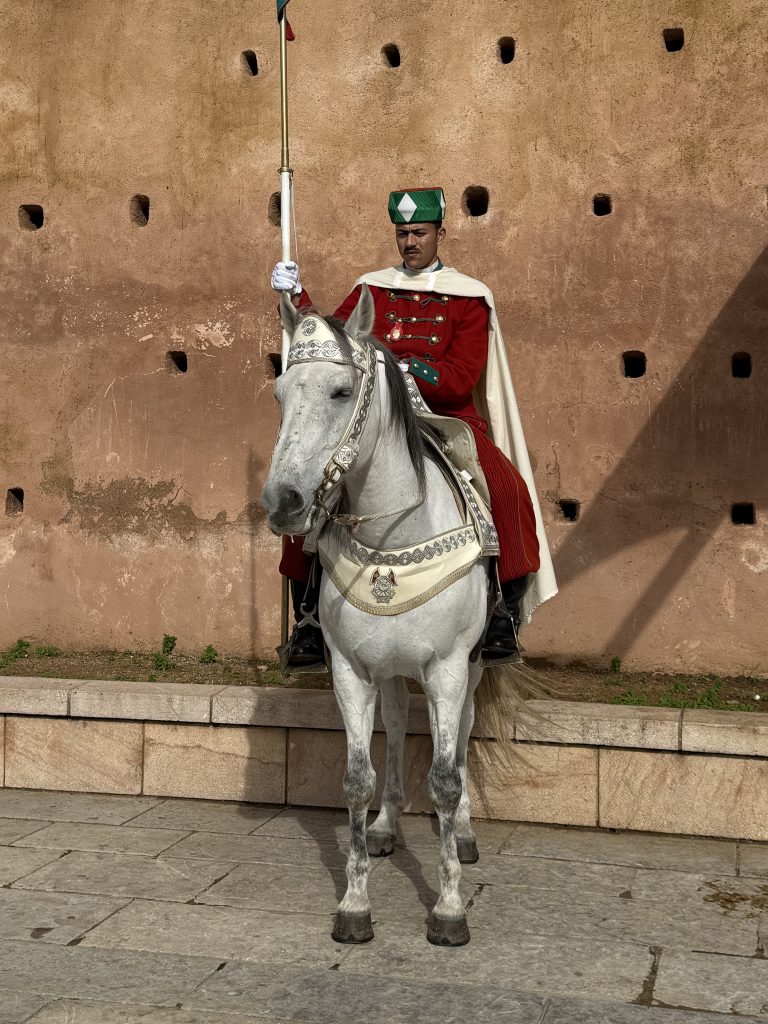
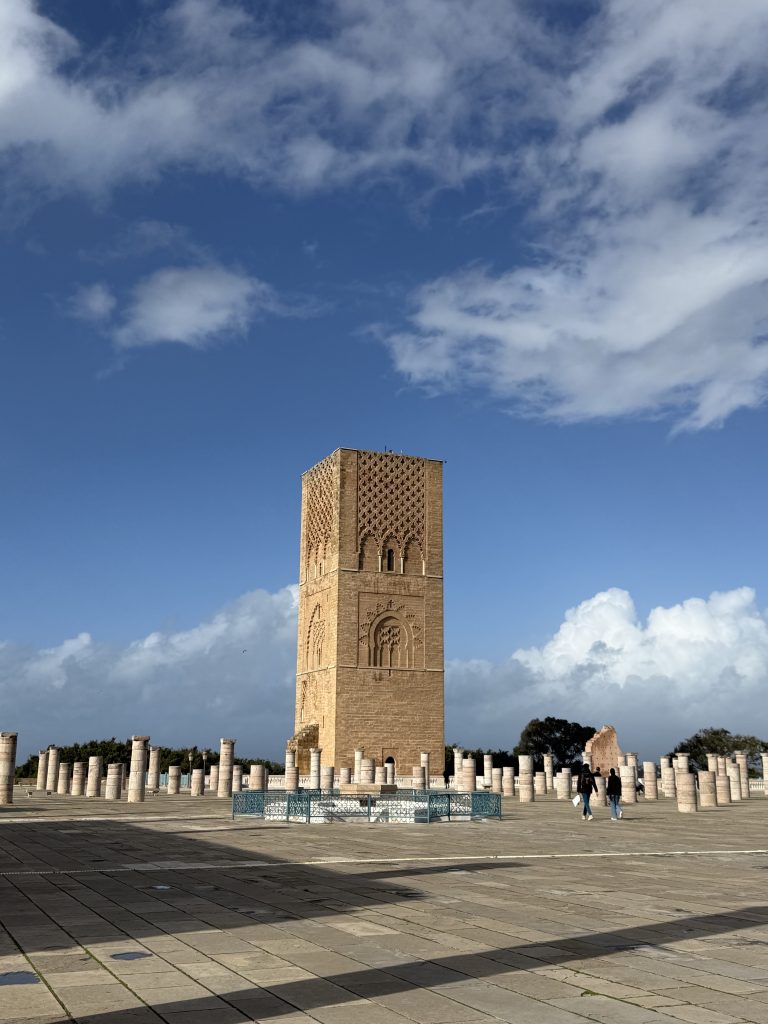
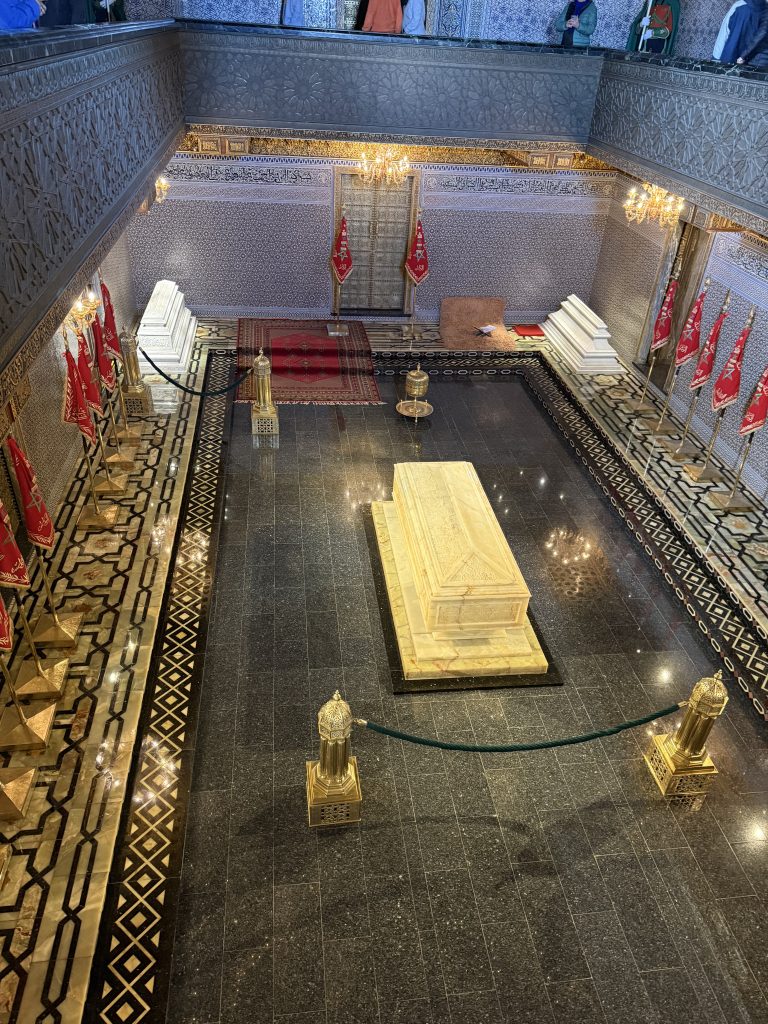
After soaking in the magic of Fez, we headed toward Rabat, Morocco’s modern capital city. Our first stop was the impressive Hassan Tower, an unfinished minaret from the 12th century that was meant to be the tallest in the world. Beside it stands the Mausoleum of Mohammed V, the beloved king who led Morocco to independence from French rule in 1956. The white marble building, guarded by royal sentries, was both peaceful and grand — a powerful symbol of the nation’s pride and resilience.
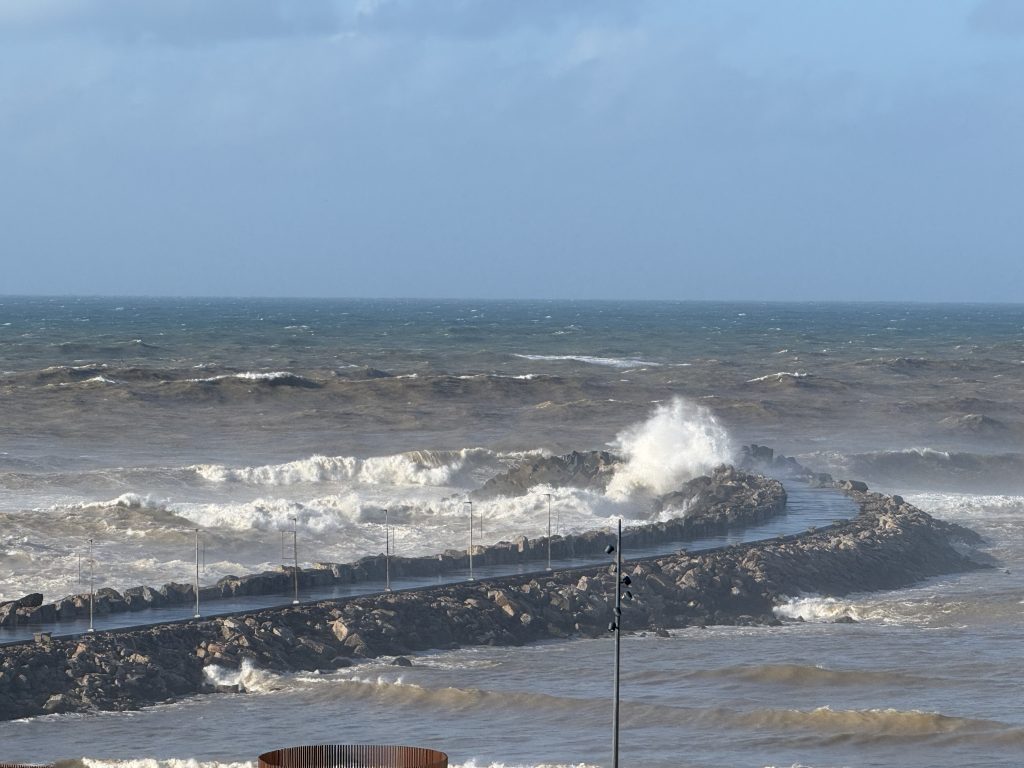
We then visited the Oudayas Museum near the Kasbah of the Udayas. From outside, we enjoyed breathtaking views of the Atlantic Ocean, where waves crashed against the shore below. The salty breeze and endless horizon offered a refreshing contrast to the busy medinas we had explored earlier.
As evening approached, we continued on to Casablanca, Morocco’s largest city and economic hub. The drive felt like a journey into a more modern side of the country, with wide boulevards and tall buildings replacing ancient walls.
We checked in for the night at the four-star Suisse Hotel in Casablanca, tired but filled with unforgettable memories. From medieval streets to coastal landmarks, the day had been a beautiful blend of history, culture, and personal discovery — another chapter of Morocco that had deeply touched my heart.
Day Five: From Atlantic Casablanca to the Magical Nights of Marrakech
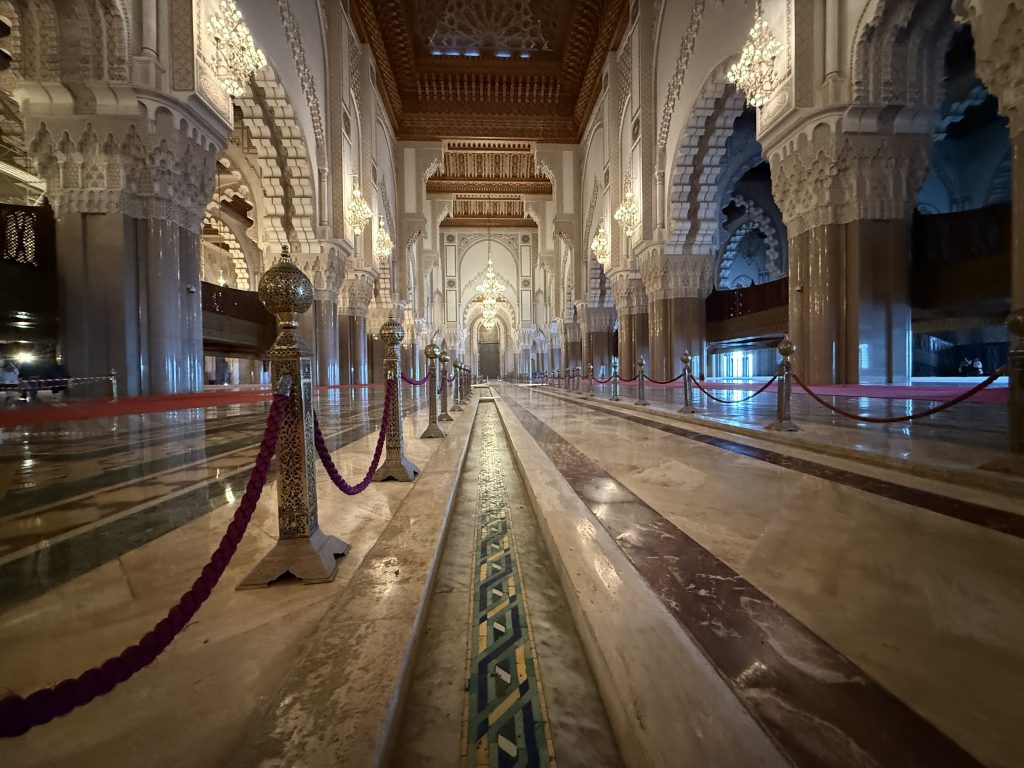
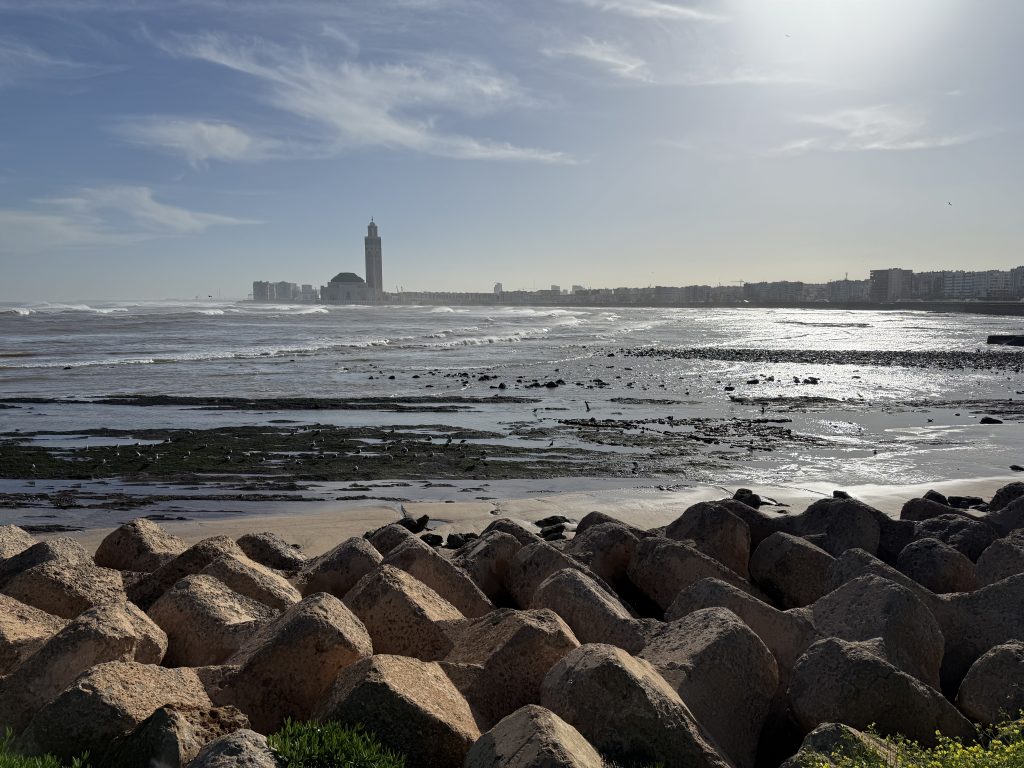
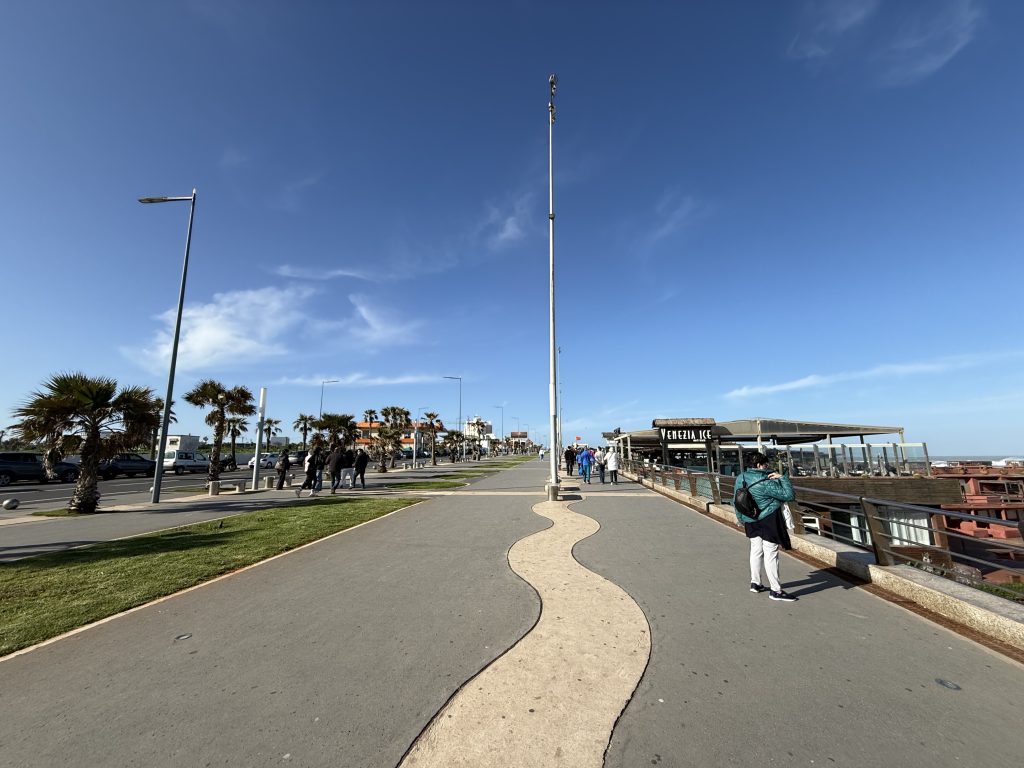
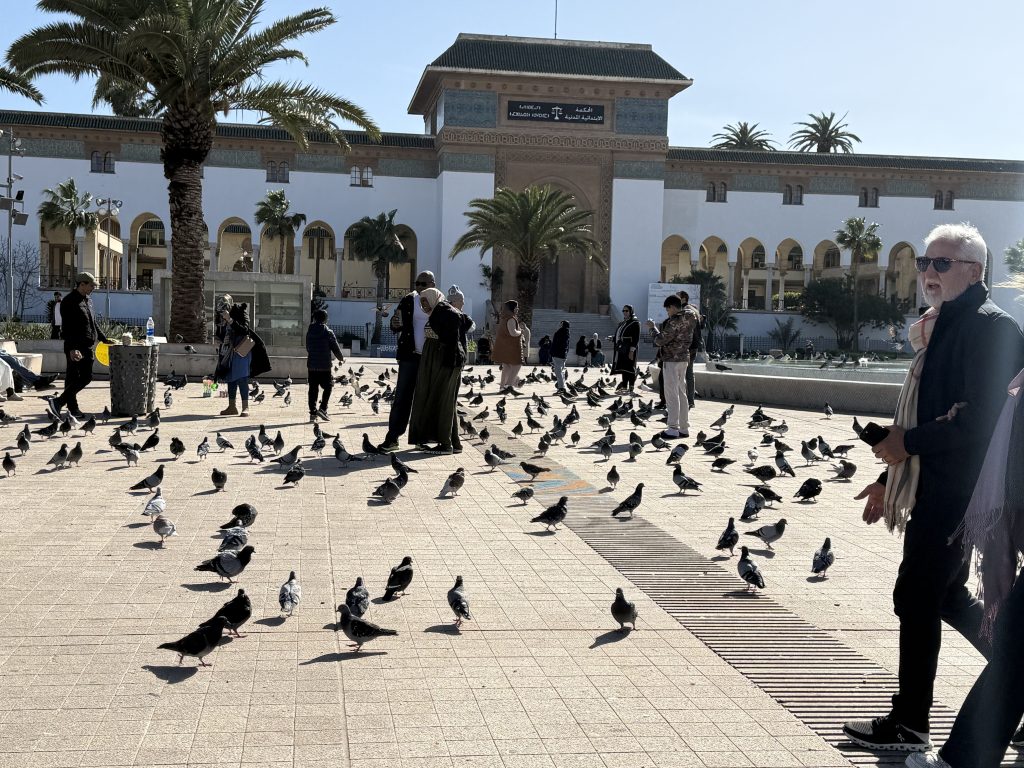
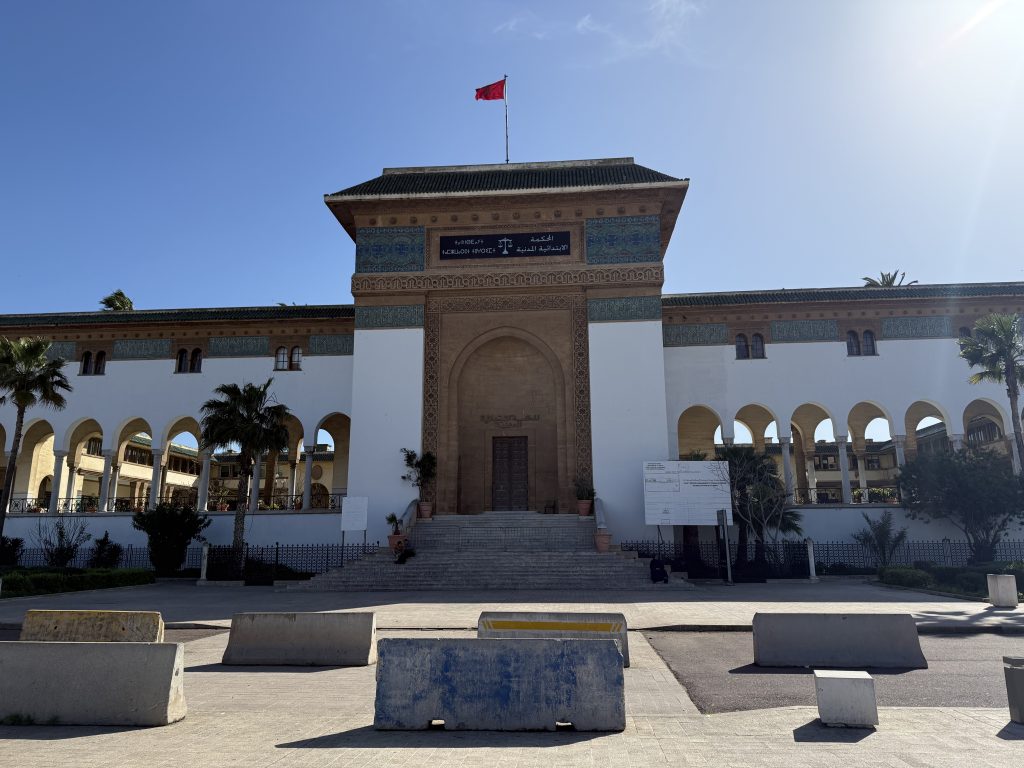
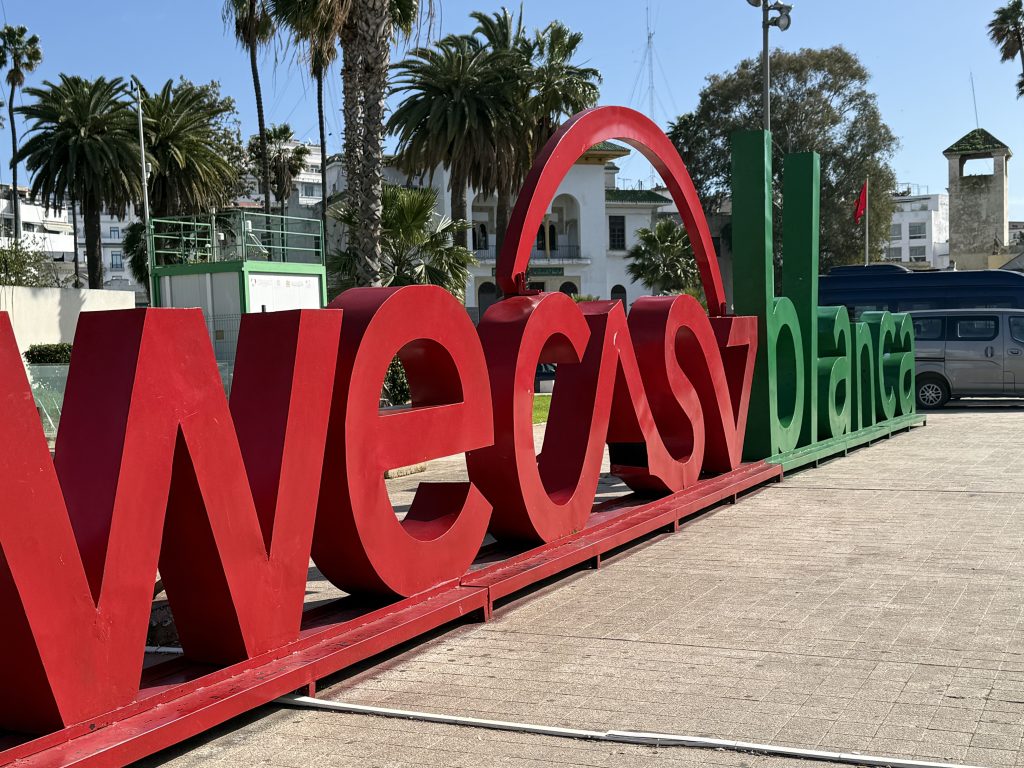
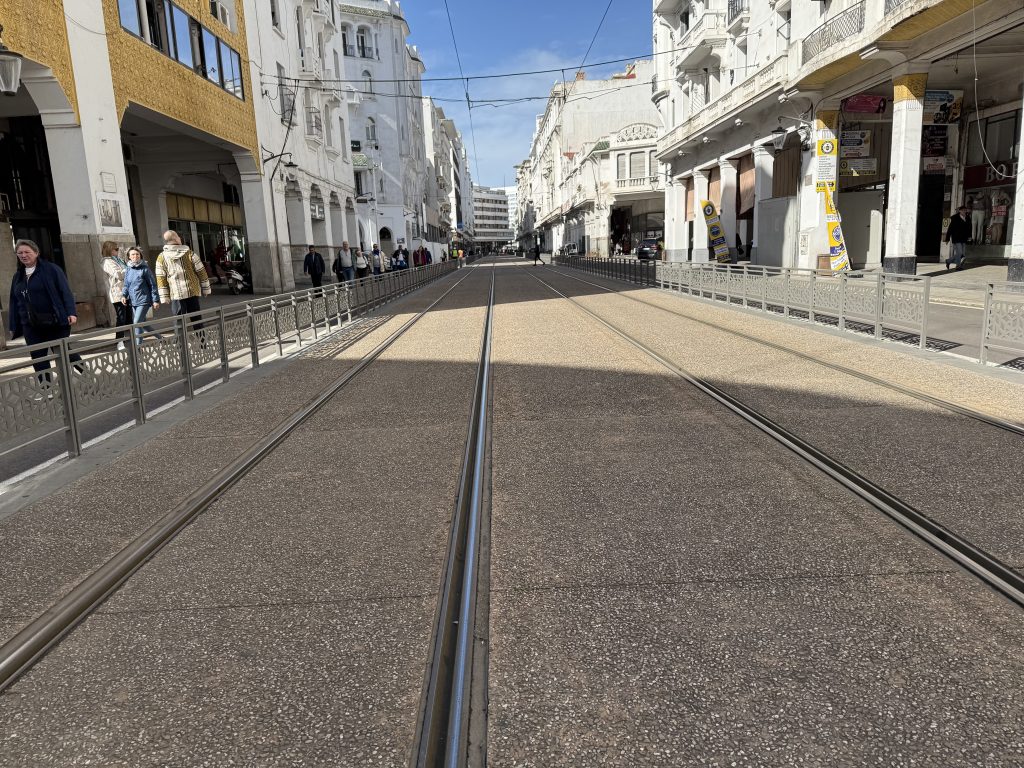
Day five began with a sense of movement and anticipation. After breakfast, we loaded our luggage onto the bus and set out to explore more of Casablanca before heading south. Our first stop was Mohammed V Square, the administrative heart of the city and a place that reflects Morocco’s journey into modernity. Built during the French Protectorate in the early 20th century, the square is surrounded by elegant buildings blending Art Deco and Moorish architectural styles. Standing there, I could clearly see how Casablanca grew from a small port town into Morocco’s economic capital.
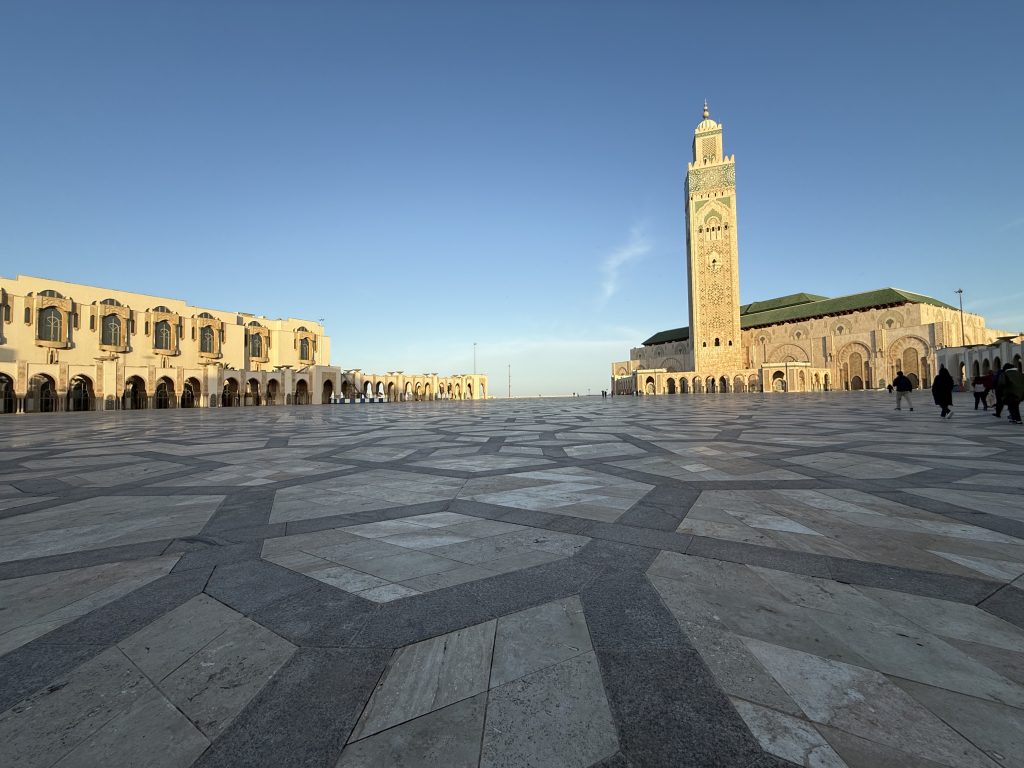
Nearby, we learned about the history and significance of the Hassan II Mosque, one of the largest mosques in the world. Although our visit focused more on its historical background than an interior tour, the story alone was impressive. Completed in 1993 and partly built over the Atlantic Ocean, the mosque symbolizes Morocco’s deep spiritual roots and its openness to the world. Its towering minaret, the tallest globally, dominates the skyline and serves as a reminder of faith woven into everyday life.
Afterward, we enjoyed a leisurely walk along the Corniche, Casablanca’s seaside promenade. The Atlantic Ocean stretched endlessly before us, waves crashing against the shore while locals strolled, chatted, and relaxed. Taking photos by the seafront, I felt a calm contrast to the busy city streets — the ocean seemed timeless, quietly witnessing centuries of change.
Before lunch, we walked through the lively streets of Casablanca and visited the local fish, vegetable, and meat markets. This was one of the most authentic experiences of the day. Vendors loudly advertised their goods, fresh seafood glistened on beds of ice, and the scent of herbs and spices filled the air. Watching locals shop for their daily meals gave me a glimpse into everyday Moroccan life — vibrant, communal, and deeply connected to tradition.
After lunch, we boarded the bus and began our journey to Marrakech. The nearly three-hour drive unfolded like a moving painting. Rolling plains gradually gave way to dramatic scenery, and once again the Atlas Mountains appeared on the horizon. Their presence felt familiar by now, almost comforting, as if they were silent companions throughout our journey across Morocco.
Upon arriving in Marrakech, known as the “Red City” for its rose-colored buildings, we visited a traditional Moroccan pharmacy. This stop was surprisingly fascinating. We learned about natural remedies that have been used for centuries, especially argan oil — often called “liquid gold” — prized for its benefits to skin, hair, and health. Cactus oil, rarer and even more precious, was explained as a powerful anti-aging remedy. Listening to these age-old practices made me appreciate Morocco’s deep knowledge of nature and healing.
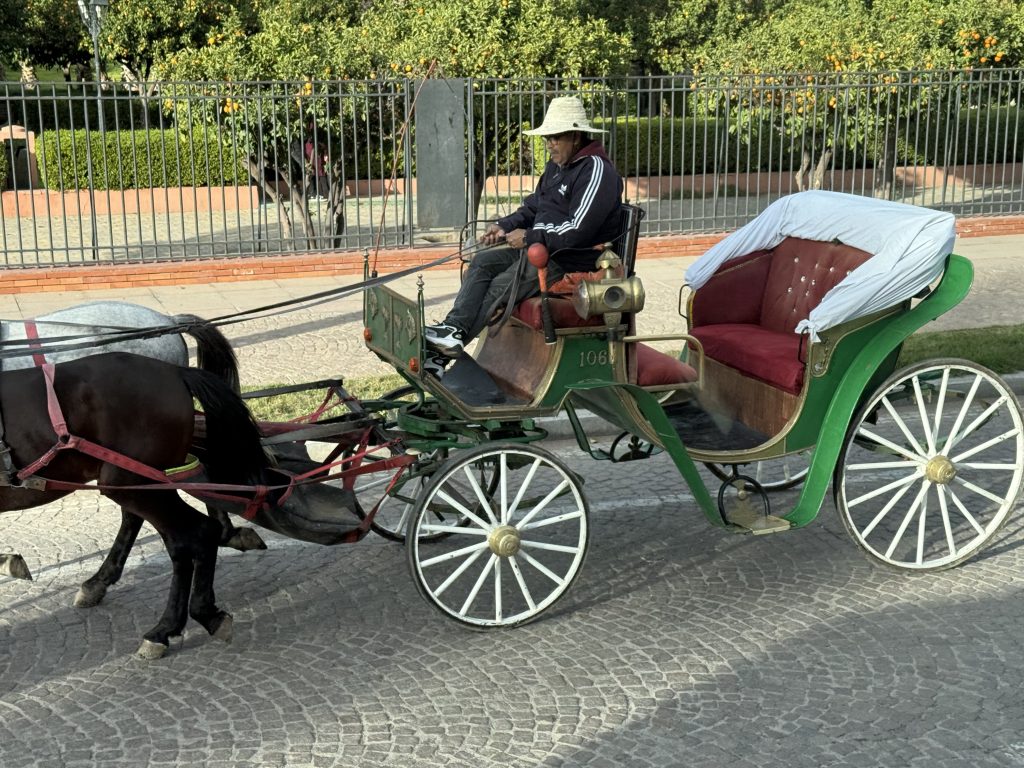
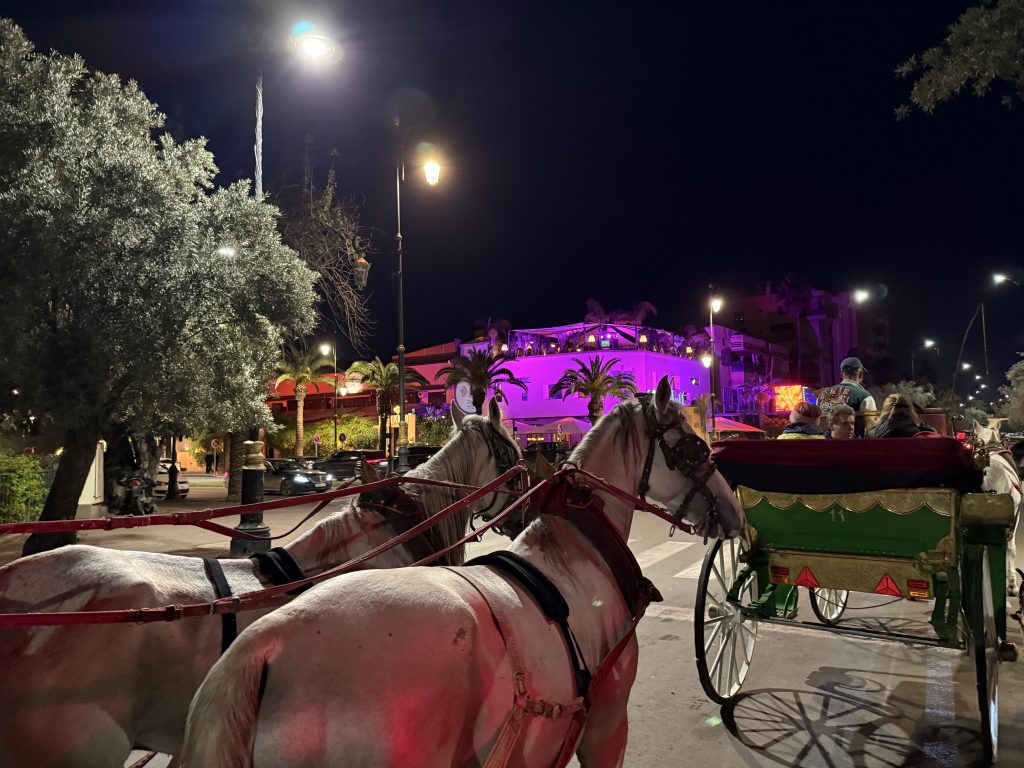
The highlight of the day came after sunset, when we experienced Marrakech by night. Riding through the city in a horse-drawn carriage felt almost magical. The streets glowed under warm lights, palm trees swayed gently, and the sounds of the city softened into something almost poetic. It was a moment that felt both romantic and timeless.
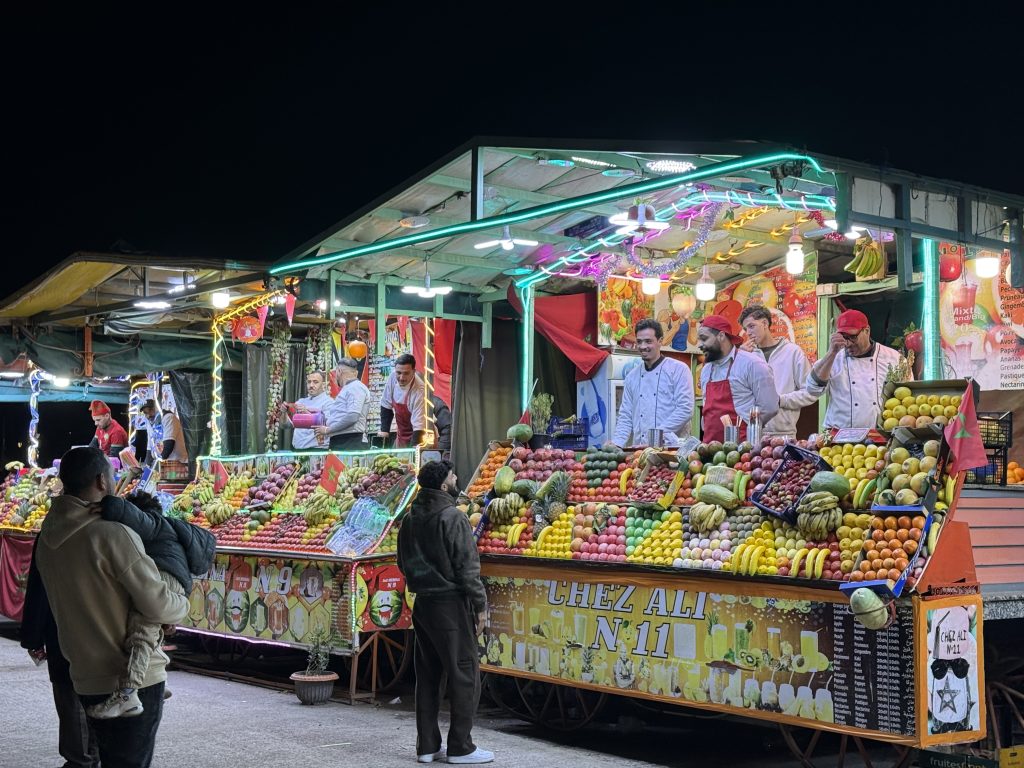
Our night tour ended at the legendary Jemaa El Fna square, the beating heart of Marrakech. Packed with people, storytellers, musicians, food stalls, and performers, the square was alive with energy. For centuries, Jemaa El Fna has been a gathering place for traders and entertainers, and even today it remains a living symbol of Moroccan culture.
We concluded the day with an overnight stay at the four-star Hotel Ayoub in Marrakech, tired but exhilarated. As I reflected on the day, I realized how beautifully Morocco balances tradition and modern life — a country that reveals its soul most vividly after the sun goes down.
Final Day in Morocco: Farewell to Marrakech and a Journey to Remember
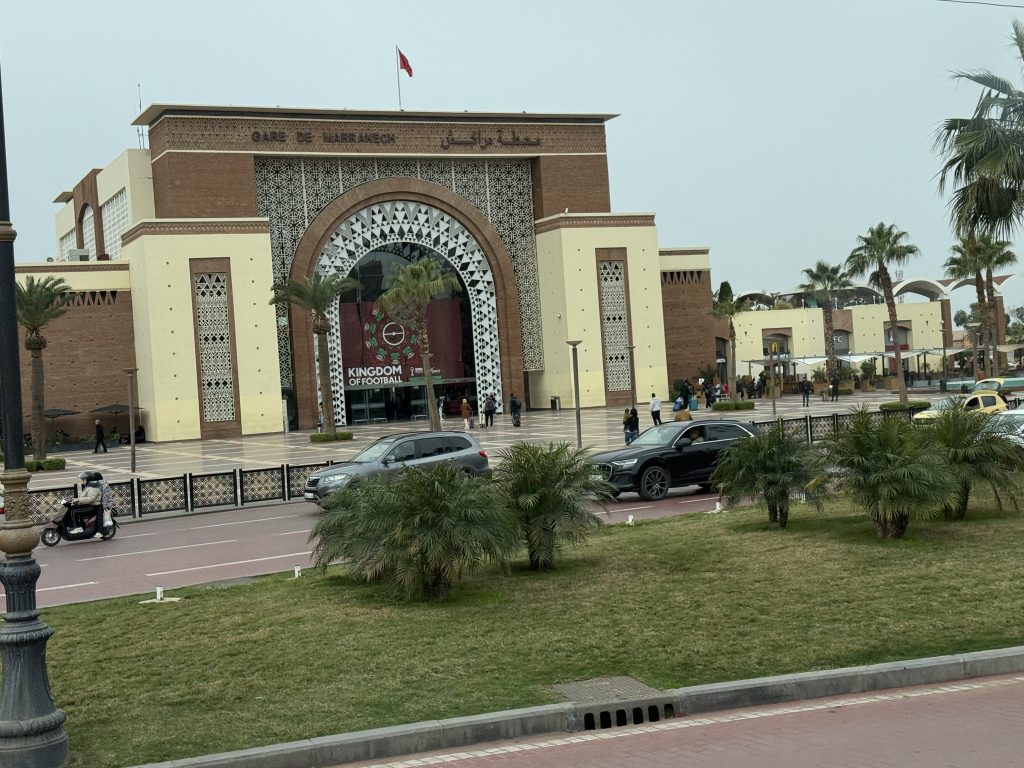
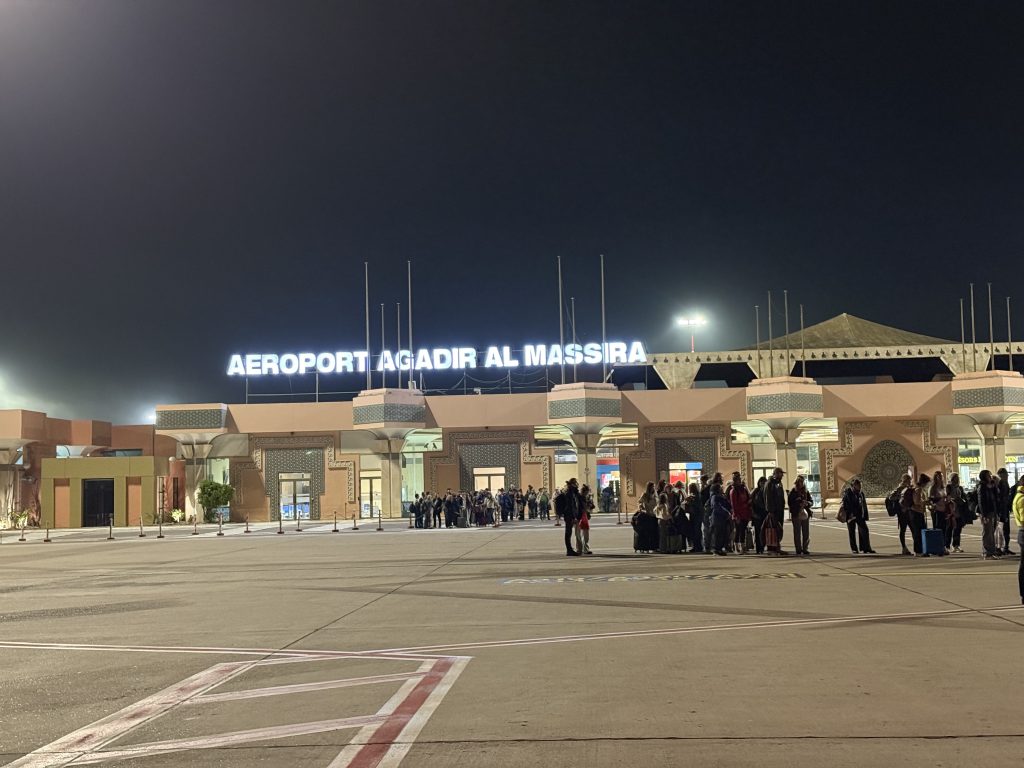
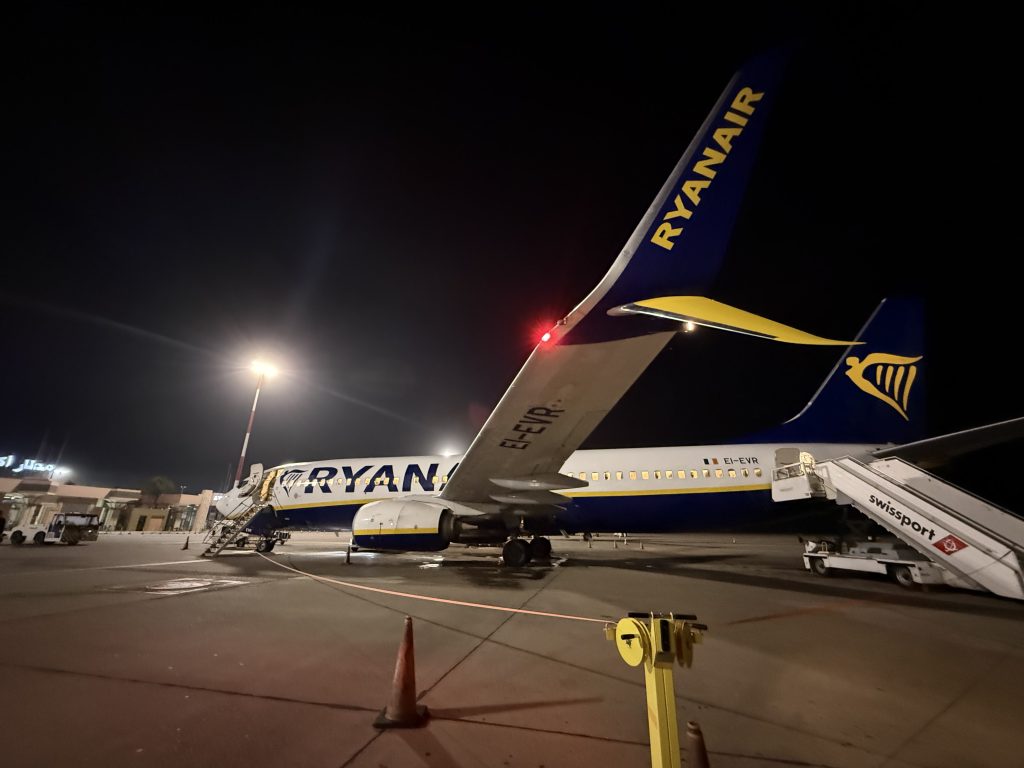
Our last day in Morocco began in Marrakech, a city that had already captured our hearts with its colors, sounds, and timeless energy. After breakfast, we set off by bus to experience yet another side of this remarkable city, eager to make the most of our final hours.
Our first stop was the enchanting Anima Garden, created by Austrian artist and music lover André Heller. Nestled at the foothills of the Atlas Mountains, the garden is a unique fusion of nature and art. Exotic plants from around the world grow alongside surreal sculptures, poetic inscriptions, and artistic installations. Walking through Anima felt like stepping into a dream — peaceful, imaginative, and deeply personal. It was a place that encouraged reflection, and for a moment, the busy rhythm of travel faded into calm appreciation.
Next, we visited a leather workshop, where a small fashion show introduced us to finely crafted Moroccan leather products. Leather making has been a vital craft in Morocco for centuries, particularly in cities like Fez and Marrakech. The quality and craftsmanship were impressive, and some of us couldn’t resist purchasing leather jackets as lasting souvenirs — wearable memories of this journey.
We then returned to the historical heart of Marrakech to explore its 12th-century city walls, a UNESCO World Heritage Site built during the Almoravid dynasty. These red sandstone walls once protected the city and still define its character today. Passing through the magnificent Bab Agnaou Gate, known for its detailed stone carvings and Quranic inscriptions, felt like entering another era. The gate stands as one of the finest examples of Almohad architecture and a powerful symbol of Marrakech’s imperial past.
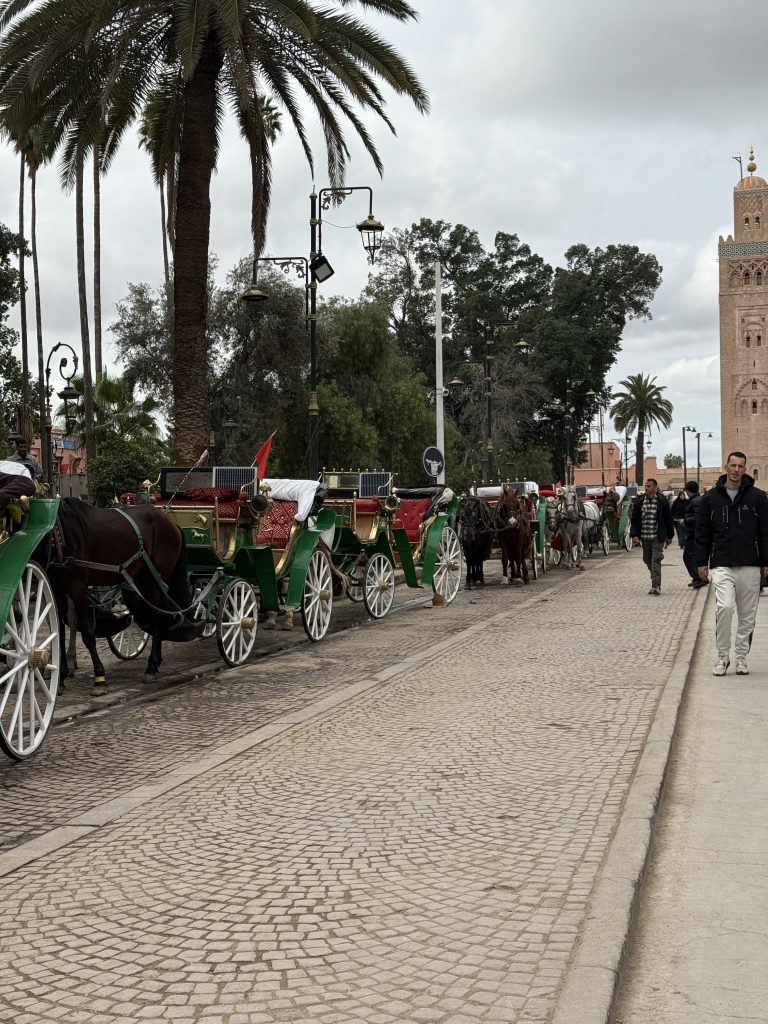
Our tour continued past the Royal Palace, still used by the Moroccan monarchy, reminding us of the city’s ongoing political and cultural importance. Nearby stood the iconic Koutoubia Mosque, Marrakech’s most famous landmark. Built in the 12th century, its elegant minaret served as a model for other great towers, including the Giralda in Seville. Though non-Muslims cannot enter, simply standing near it and learning about its history was deeply meaningful.
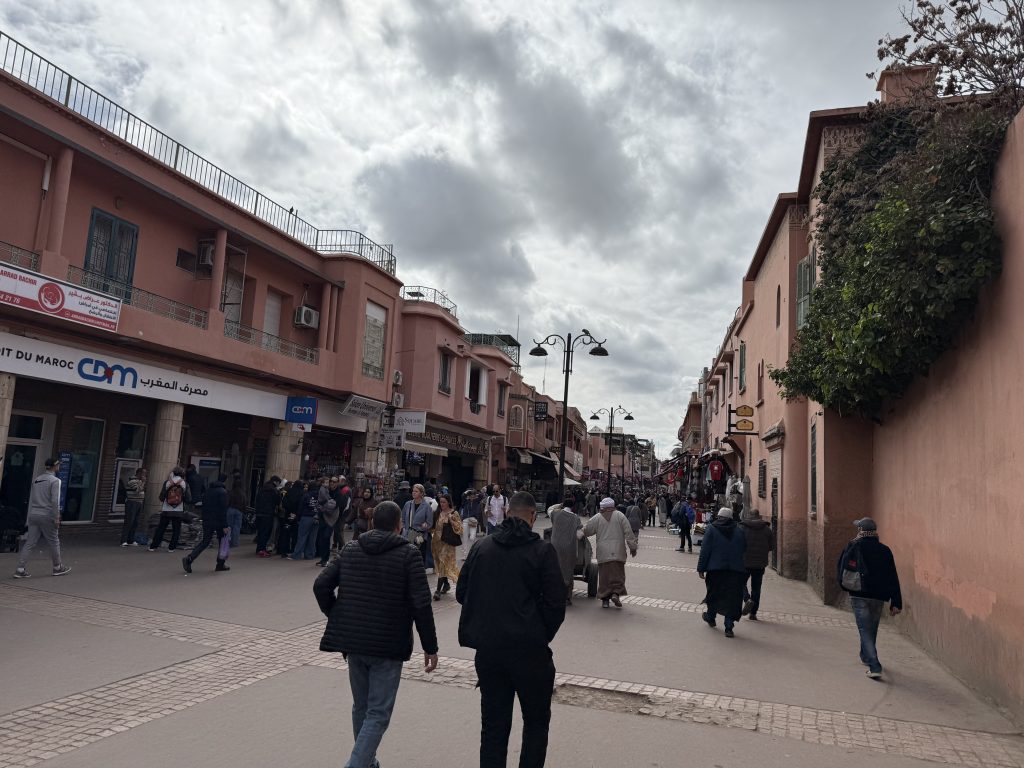
Our guides then gave us time to walk through the Medina, the oldest part of the city, ending once again at Jemaa El Fna square. With two full hours to explore, we soaked in the lively atmosphere — musicians, storytellers, street performers, and food stalls creating a vibrant tapestry of Moroccan life. It felt like the perfect farewell to Marrakech.
Later in the day, we drove to Agadir to prepare for our early flight back to Vienna the next morning. As we packed our bags, I took time to reflect on everything we had experienced.
I can truly say, from my heart, that this journey was a once-in-a-lifetime experience. From the magnificent mountain trails of the Atlas to the historic cities we visited, Morocco revealed its beauty in countless ways. I am especially grateful to our very well-informed tour guide, Selim, whom I deeply respect for his outstanding expertise and knowledge — whether in religious, cultural, or economic aspects. My sincere thanks also go to Anwar, our Moroccan tour guide and bus driver, who did an excellent job throughout the tour, and to Joseph, who kindly assisted us with all the baggage. This journey will remain etched in my memory forever — a story of discovery, learning, and unforgettable moments.
- Mag. Hector Pascua


This post has already been read 3202 times!